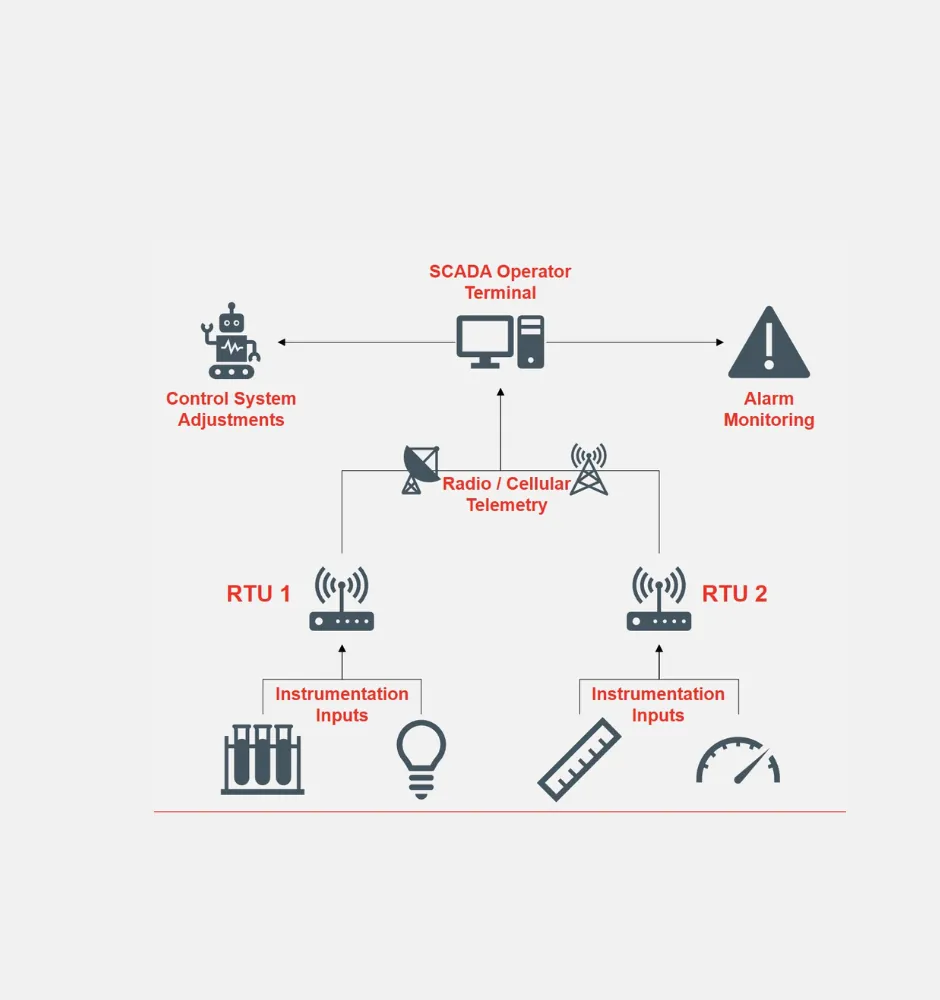
SCADA (short for Supervisory Control and Data Acquisition) is a powerful combination of software and hardware that forms the backbone of industrial control. It doesn't just collect data; it provides the overview and the ability to make real-time decisions…
SCADA: The brain of modern industrial automation
SCADA (short for Supervisory Control and Data Acquisition – supervisory control and data acquisition) is a powerful combination of software and hardware that forms the backbone of industrial control. It doesn't just collect data; it provides the overview and the ability to make the real-time decisions needed for the efficient, safe and continuous operation of complex systems.
Whether it's regulating pressure in pipelines thousands of kilometers long, precisely controlling PLCs (programmable logic controllers) in a manufacturing plant, or ensuring the smooth running of water treatment facilities, the SCADA system is the bridge between complex machinery and human operators.
What is SCADA?
Put simply and directly, a SCADA system acts as the central nervous center of industrial processes. It provides two-way communication:
- It collects data from sensors, machines and field devices.
- It presents this information to operators through a graphical human-machine interface (HMI).
- It executes control commands issued by the operator or automatically by the system.
This capability lets operators make timely decisions and take immediate action when needed. For example, if a pump in a chemical plant overheats, the SCADA system immediately alerts the operator (with an alarm), who can respond before serious damage or costly downtime occurs.
Today SCADA systems play a key role in a wide range of industries such as energy (power generation and transmission), oil and gas, manufacturing (food, automotive, chemicals) and water and wastewater management. SCADA is an essential and irreplaceable tool in modern industrial automation.
Architecture: The main components of a SCADA system
A SCADA system is designed to work in layers, providing both fast local control and centralized supervision and data logging.
- Field devices: Sensors and actuators
These are the end elements – the instruments on the shop floor or at the remote site that interact directly with the physical process.
- Sensors (e.g. temperature probes, pressure transducers, flow meters) collect raw data and provide real-time inputs.
- Actuators (e.g. control valves, relays, motors) perform physical actions and provide the control outputs that regulate the process. Without them, the SCADA system would have no visibility into the process and no way to influence it.
- PLCs and RTUs: The on-site brains
To control the field devices, two types of intelligent controllers step in, serving as the primary line of control:
Component | Programmable Logic Controllers (PLC) | Remote Terminal Units (RTU) |
Application | Ideal for high-speed, logic-intensive operations in a manufacturing environment (factories). | Designed for remote/outdoor installations (pipelines, substations, water pumping stations). |
Function | Faster and more capable of complex control and algorithms (they use ladder logic). | Collect telemetry data, often run on low power/batteries and use long-distance communications (radio, satellite). |
Both components collect data from the sensors, process it and control the machines based on programmed instructions. They handle the minute-by-minute control tasks, while the central SCADA server focuses on supervision.
- Communication network
This is the path the data travels between the PLC/RTU devices and the central SCADA computer. Networks can be:
- Wired (e.g. Ethernet) for local installations.
- Wireless (e.g. radio, cellular, satellite) for remote sites.
This network extends the SCADA system's reach to every point where there is process equipment.
- Main SCADA station (Master) and HMI
At the top is the main SCADA station (the brain of the system), which is usually a high-performance computer or a server network. This server:
- Collects data from all field controllers (PLC/RTU).
- Stores it in databases for historical analysis.
- Presents it through the HMI (Human-Machine Interface).
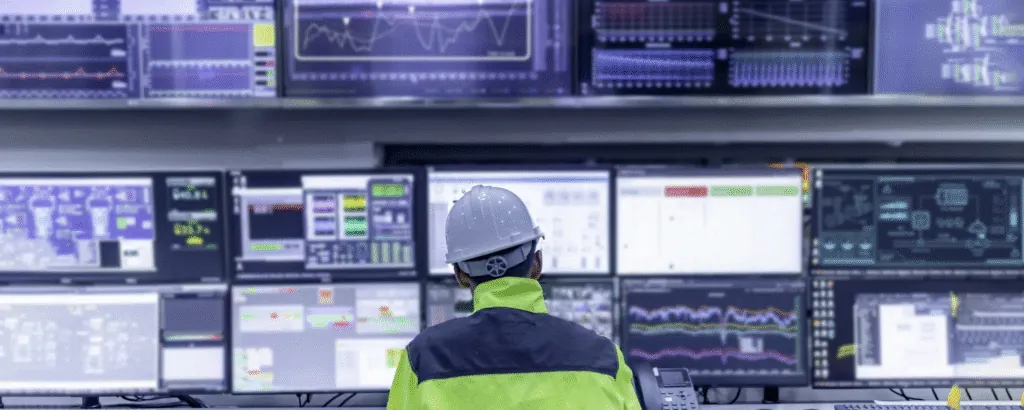
Operators use the HMI – the graphical user interface – to track system performance through easy-to-understand schematics and charts, adjust setpoints and respond to alerts.
The importance of SCADA in Industry 4.0
This layered design keeps critical tasks (such as stopping a pump when pressure spikes) in the hands of the PLCs and RTUs for a fast response, while the main SCADA server focuses on system monitoring, archiving and data analysis.
With the development of Industry 4.0 and the Industrial Internet of Things (IIoT), modern SCADA systems are becoming even more sophisticated and connected. They are no longer just control systems but business intelligence tools that provide data for:
- Process optimization: Analyzing historical data to increase efficiency.
- Predictive maintenance: Identifying potential equipment problems before a failure occurs.
- Improved safety: Rapid detection of and response to hazardous conditions.
In conclusion, SCADA is an essential tool in modern industrial automation. This guide aimed to help you understand the main components so you can better evaluate and implement the SCADA solutions that will ensure the smooth operation and sustainable growth of your organization.
On the Artec Robotics “News” page you will find a variety of articles and guides on robotics and automation. Here you'll find useful information about the latest technologies, software solutions and programs. They will help you dive deeper into the world of industrial robots and automated systems.
Follow the news from Artec Robotics!
MAKE AN INQUIRY