AI will keep growing in 2025, but it will face major challenges
In 2024, artificial intelligence (AI) continued to take big and surprising steps forward. People began talking to AI “resurrections” of the dead and using AI toothbrushes.
Meanwhile, OpenAI, the company behind ChatGPT, was valued at US$150 billion and claimed it was on the way to developing an advanced AI system more capable than humans. Google's AI company DeepMind made a similar claim.
These are just a few of AI's milestones over the past year. They confirm not only how enormous the technology has become, but also how it's transforming a wide range of human activities.
So what can we expect to happen in the world of AI in 2025?
Neural scaling
Neural scaling laws suggest that the capabilities of AI systems will increase predictably as the systems grow in size and are trained on more data. These laws have so far theorized the leap from the first to the second generation of generative AI models such as ChatGPT.
Everyday users like us experienced this as the transition from fun chats with chatbots to doing useful work with AI “copilots”, such as drafting project proposals or summarizing emails.
Recently, these scaling laws seem to have plateaued. Making AI models bigger no longer makes them more capable. OpenAI's latest model, o1, tries to overcome the size plateau by using more computing power to “think” about harder problems. But this is likely to increase costs for users and doesn't solve fundamental problems such as hallucinations.
Training data
Most modern AI systems rely on huge amounts of training data. However, training data has hit a wall, as most high-quality sources have been exhausted.
Companies are running trials in which they train AI systems on AI-generated data sets. This is despite a serious lack of understanding of the new “synthetic biases” that could create an already biased AI.
Robotics
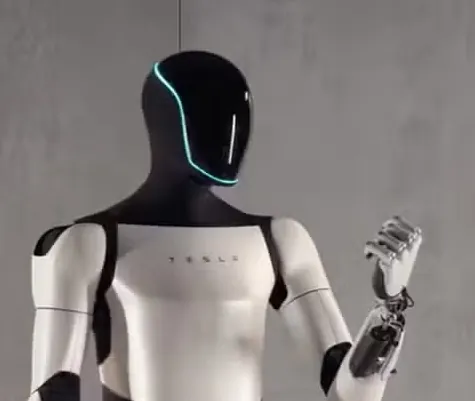
This year Tesla announced an AI-powered humanoid robot. Known as Optimus, this robot is able to perform a range of household chores.
In 2025, Tesla intends to deploy these robots in its internal manufacturing operations, with mass production for external customers in 2026.
Workplace productivity
We can expect workplaces to keep investing in licenses for various AI “copilot” systems, as many early trials show they can increase productivity.
MAKE AN INQUIRY