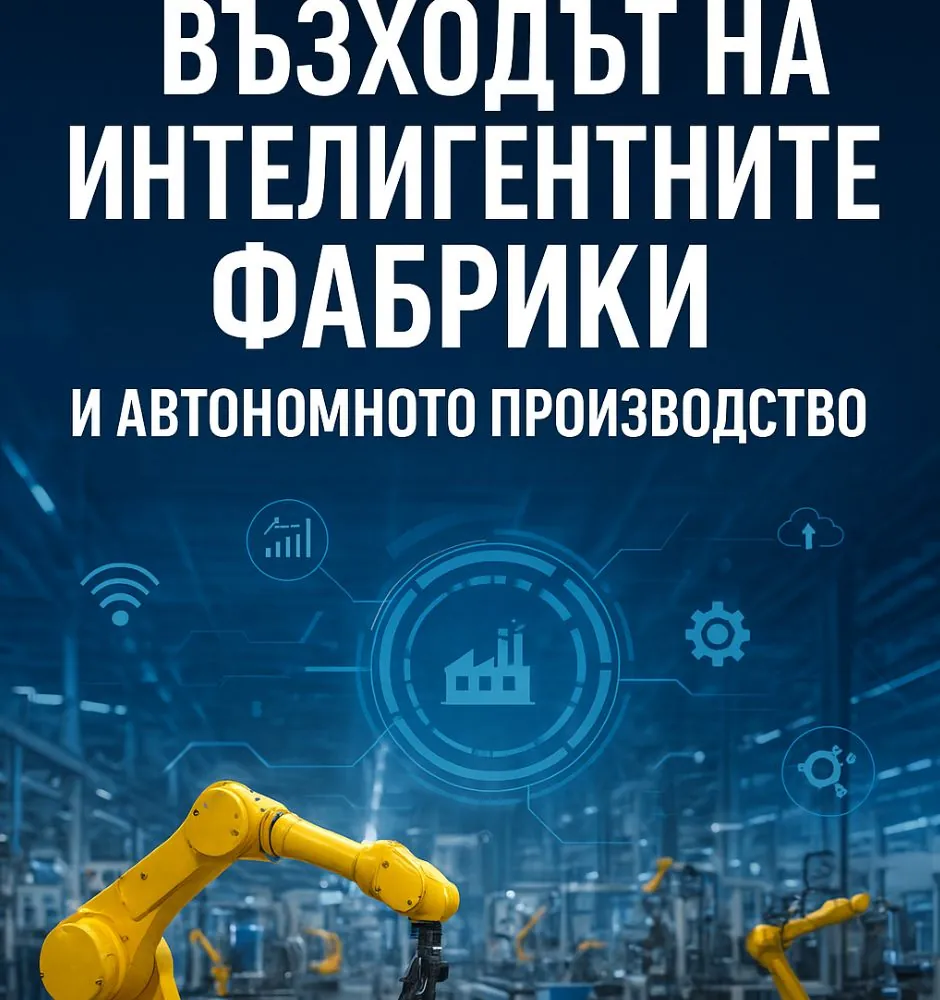
Engineering beyond automation and autonomous production
A profound transformation is now under way on the factory floor. What was once seen as just rows of machines and manual checkpoints is now a living, digitally connected ecosystem of sensors, algorithms and adaptive robots. Smart factories are the culmination of the Industrial Internet of Things (IIoT), artificial intelligence (AI), digital twins, edge computing and sophisticated robotization, which are redefining how products are designed, manufactured and delivered.
This article describes in detail what smart factories are, the key difference between them and traditional automation, the technologies behind this Industry 4.0 revolution, the enormous business value they generate, the practical challenges of scaling them, and a roadmap manufacturers can follow to start their transformation.
From automation to autonomy: defining the smart factory
Conventional automation meant codifying repetitive, deterministic work through programmable logic controllers (PLCs) and robotic arms. It was efficient but not flexible.
Smart factories take a decisive step forward: systems sense, reason, learn and act autonomously.
Characteristic | Traditional automation | Smart factory |
Decision-making | Deterministic, pre-programmed | Adaptive, data-driven (AI/ML) |
Maintenance | Scheduled (preventive) | Predictive, condition-based |
Flexibility | Fixed production line | Dynamic, reconfigurable on the fly |
Human role | Replacing manual labor | High-level control, exception handling and system design |
For example, a machine can predict an impending failure by analyzing vibrations (IIoT data + AI) and schedule maintenance during a natural lull in production. Software-defined production cells can be reconfigured on the fly for mixed-model production (high-mix, low-volume) instead of a fixed line. The shift is about elevating human control and decision-making to a higher, strategic level.
The technologies that run smart factories
A smart factory can be described as a set of deeply integrated, synergistic technologies:
- Industrial Internet of Things (IIoT): A network of sensors, actuators and gateways that turn physical measurements into streams of real-time data. It's the factory's nervous system.
- Edge computing: Processing data on site (next to the machine), providing deterministic control, low-latency responses (critical for robotization and safety) and less dependence on the cloud.
- Artificial intelligence (AI) and machine learning (ML): anomaly detectors, defect classifiers in computer vision, schedule optimization and demand forecasting. AI turns data into autonomous action.
- Digital twins (Digital Twins): Computer-based virtual copies of machines, robotic lines or entire plants. They let engineers simulate changes, test conditions and predict their results without putting production at risk.
- Cloud analytics and platforms: For training large-scale ML models, managing the system life cycle and coordinating multiple sites.
Business value and the benefits of integration
Smart factories deliver measurable benefits in terms of productivity, quality and flexibility:
- Less unplanned downtime: predictive maintenance based on IIoT and AI reduces unplanned stoppages and optimizes costs.
- Better quality: visual inspection based on artificial intelligence minimizes scrap and defects by providing 100% inspection of output.
- Faster time to market (Time-to-Market): digital twins shorten time to market through simulated production tests and virtual commissioning.
Resource optimization: energy-aware scheduling and AI-driven process control reduce energy and raw material consumption, supporting sustainability.
Challenges and practical pitfalls
Despite the huge potential, some projects fail for the following reasons:
- Inadequate data preparation: Raw sensor streams must be cleaned, put into context and labeled so that ML models can learn a reliable pattern.
- Isolated systems and legacy equipment: Outdated equipment and isolated systems (lack of connectivity) complicate the integration between OT (Operational Technology) and IT (Information Technology). The expertise of system integrators is key to achieving this interoperability.
- Cybersecurity: Cybersecurity risks grow when operational networks are connected to wider corporate systems. Security must be built into the design from day one.
Lack of organizational maturity: Piloting a technology without defined Key Performance Indicators (KPIs), or without proper change management, turns good pilot projects into unused ones.
A practical plan for manufacturers
For organizations starting or expanding smart factory initiatives, experts recommend the following practical plan for turning experiments into lasting value:
- Choose a high-impact use case: Start with a project with a clear, measurable return on investment (ROI) – for example predictive maintenance, AI-based quality inspection or energy optimization.
- Data preparation and audit: Identify gaps in data management, and catalog sensors, data formats and storage.
- Build modular, interoperable stacks: Avoid vendor lock-in. Favor standards and open interfaces to ensure easy integration between OT and IT systems.
- Pilot and prove the ROI: Test at a small, representative scale and quantify the return (less downtime, fewer defects, less energy), not just technical measures.
- Invest in people and skills: Retrain employees for hybrid OT/IT skills. Form cross-functional teams (technicians, engineers, data specialists) and support change management.
Build in security and sustainability: cybersecurity and energy efficiency must be part of the design from day one
Smart factories are not an extension of industrial automation: they are a new paradigm in engineering, in which sensors, modeling and autonomous decision-making are integrated into production. The underlying technologies (IIoT, edge computing, AI, digital twins) are mature enough to deliver real benefits today.
The future of manufacturing is flexible, sustainable and human-centered engineering. Manufacturers who combine pragmatic engineering with expert system integrators and people-focused strategies will be best placed to capture the value of this revolution.
On the Artec Robotics “News” page you will find a variety of articles and guides on robotics and automation. Here you'll find useful information about the latest technologies, software solutions and programs. They will help you dive deeper into the world of industrial robots and automated systems.
Follow the news from Artec Robotics!
MAKE AN INQUIRY