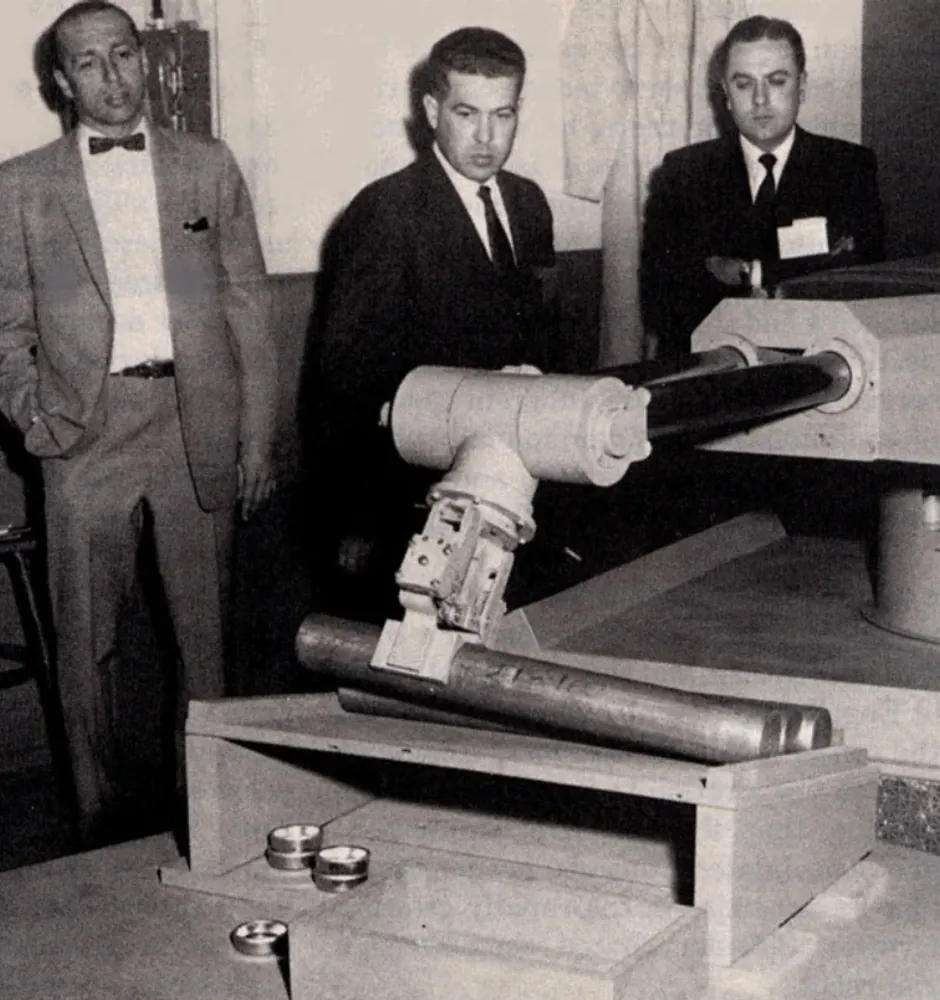
George Devol and Unimate: The revolution in industrial automation
George Charles Devol Jr. (1912–2011) was an American inventor whose name is inseparable from the birth of modern robotics. George Devol's most significant achievement, Unimate, is a key invention that changed industrial production forever and laid the foundations of modern automation.
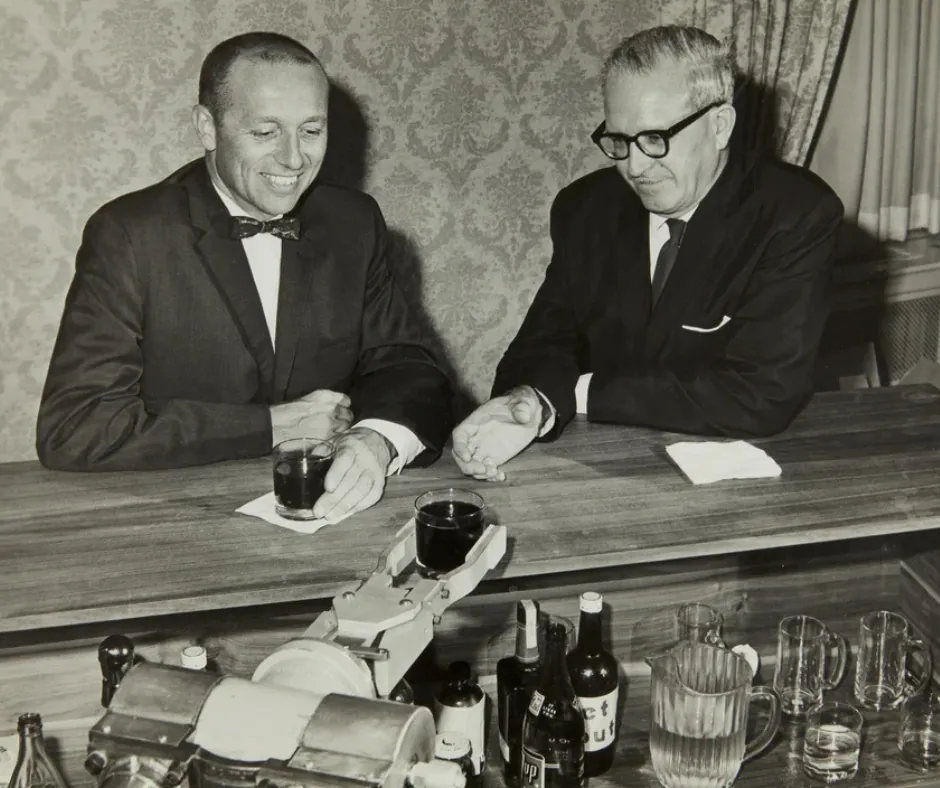
A robot serves drinks to Unimation co-founders Joseph Engelberger [left] and George Devol
The start of an idea
In the 1950s, Devol realized the need to automate repetitive and dangerous production tasks. He patented a “Universal Manipulator”, or Unimate, a programmable robot capable of performing a range of functions. In 1961 the invention was installed at the General Motors plant in Trenton, New Jersey.
The first Unimate was sold to GM for $18,000, which at the time was well below its production cost, since it was seen as an investment in the future. Its main task was lifting and stacking hot metal parts from die-casting machines, which protected workers from potential injuries.
What is Unimate?
Unimate is essentially a manipulator controlled by a programmable controller. It uses a hydraulic power system and magnetic drum memory to store its sequence of movements. This lets the robot repeat the same task endlessly with exceptional accuracy and reliability. Instead of being designed for a single purpose, Unimate can be reprogrammed to perform different tasks, which makes it extremely flexible and adaptable to production needs. This versatility set it apart from all previous automated machines.
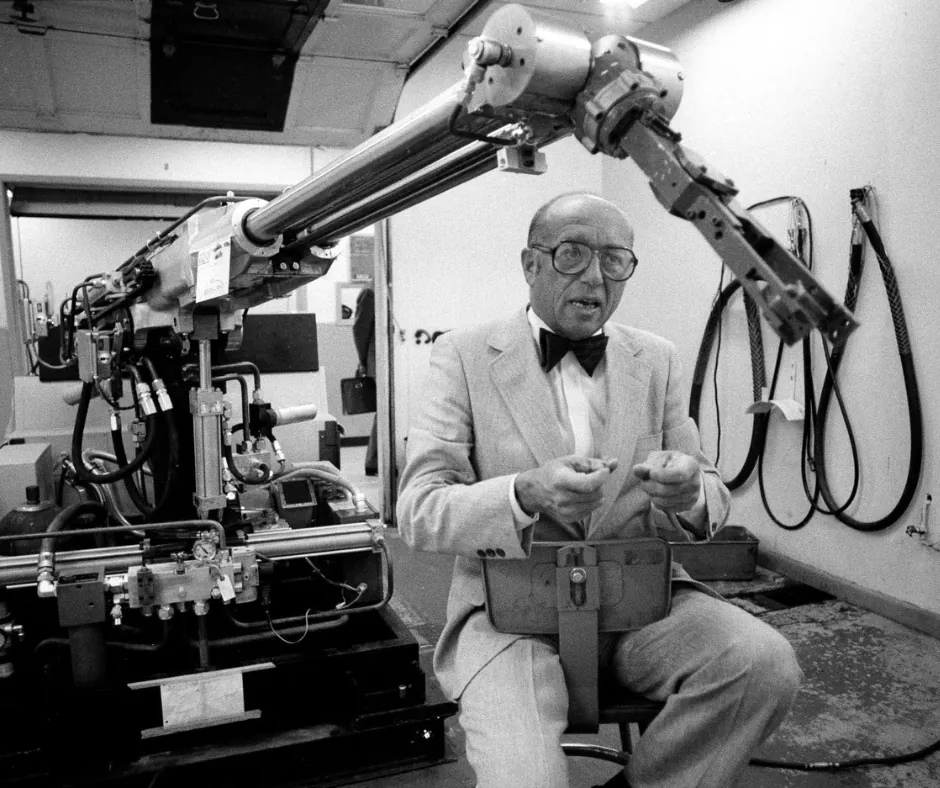
Unimate's impact on industry
The introduction of Unimate into the automotive industry marked the start of a new era. Its deployment proved that robots could work in real production conditions, improving efficiency and safety. The main benefits of Unimate include:
- Improved workplace safety: Robots can take on dangerous tasks such as handling toxic materials or lifting heavy objects, reducing the risk of workplace accidents.
- Higher productivity: Robots work 24/7 without fatigue or breaks, which leads to a constant flow of output and lowers production costs.
- Better quality: Robots perform tasks with high accuracy and consistency, which minimizes defects and leads to a higher-quality end product.
After its success at General Motors, the technology quickly spread to other sectors such as electronics, metalworking and many more, giving a boost to global industrial automation.
Challenges and public reaction
Bringing robots into production was not without its challenges, especially regarding public perception and workers' fears. While George Devol was the technical genius behind Unimate, his partner Joseph Engelberger became the company's marketing face. To dispel workers' fears of being replaced, Engelberger presented Unimate as a presentable and even entertaining machine, appearing with the robot on popular TV shows where it conducted an orchestra. At the same time, to company executives he stressed the key business advantages: the robot works 24/7, never asks for a raise and never complains.
At first, workers at GM's Trenton plant accepted Unimate, since it took over the dangerous and unpleasant job of unloading hot metal parts. The situation changed, however, in the early 1970s, when GM began integrating robotic lines on a large scale at its Lordstown, Ohio plant as part of a bigger plan to increase efficiency. This led to layoffs, the reassignment of hundreds of employees and a faster assembly line, triggering mass protests and a strike. Although Unimate was only part of this larger automation process, the events at Lordstown tarnished the company's reputation in the US, slowing the spread of the technology in its home country.
Devol's legacy
George Devol didn't just invent the first industrial robot; he laid the foundations of an entire industry. His vision of programmable machines that can adapt and perform different tasks paved the way for all modern industrial robots – from robotic arms for welding and painting to complex assembly and logistics systems. Today millions of robots work in factories around the world, and all of them are descendants of Devol's original idea. He has been honored as “the father of robotics”, underlining his enormous contribution to technological progress and the development of industrial production. His legacy continues to inspire engineers and inventors to push the boundaries of what is possible in robotics and automation.
On the Artec Robotics “News” page you will find a variety of articles and guides on robotics and automation. Here you'll find useful information about the latest technologies, software solutions and programs. They will help you dive deeper into the world of industrial robots and automated systems.
Follow the news from Artec Robotics!
MAKE AN INQUIRY