How AI is becoming teachers' ally: Examples from math, physics, geography and more
The fear that AI will replace teachers is natural but unfounded. Technology isn't a threat but a powerful tool that extends educators' capabilities. Here are concrete examples from different subjects showing how AI can make lessons more exciting, effective and personalized – without taking away the teacher's role as mentor and source of inspiration.
Math: AI as a “personal trainer” for every student
Examples:
- Real-time error diagnosis
- Platforms such as Sparx Maths or IXL use AI to analyze every step of a student's solution. For example, if a student makes a mistake expanding the brackets in the equation 3(x+2)=153(x+2)=15, the system instantly shows a visual animation of the correct approach.
- The teacher doesn't waste time checking dozens of notebooks and instead focuses on explaining the concepts the class finds difficult.
- Gamifying learning
- AI creates personalized math games. For example, students solve problems to “free” a hero from a maze, with the levels adapting to their abilities.
- The teacher uses these games as a “warm-up” before the lesson to boost engagement.
Why shouldn't teachers be afraid?
AI won't grade students for you – it will give you data on who doesn't understand what, so you can focus your attention on what matters most.
Why are math teachers irreplaceable?
AI won't replace you, because no one can pass on a passion for numbers and logic the way you can. You're the ones who:
- Turn abstract concepts into fairy tales. For example, while AI shows an animation of equations, you tell the story of the ancient Babylonians who invented them, or explain how algebra lies behind the computational beauty of skyscrapers.
- Create “aha moments”. When a student suddenly understands why xx in the equation matters, that's your doing – you're the one who approaches it with patience and creativity to “connect the dots”.
- Overcome fear. Math is the one subject where a “mistake” is part of the journey. You give students the courage to fail, laugh at their mistakes and try again – something AI will never fully imitate.
AI is your assistant, not your competition. It gives you the superpower to direct your attention where it matters most: your relationships with students. When the system shows you that 70% of the class doesn't understand exponents, you know what to do – come up with a practical exercise with light reflectors or tell a story about Archimedes.
Your role is bigger than ever:
- You're the mentor who turns dry algorithms into an adventure.
- You're the creator who finds a way to make math come alive.
- You're the leader who instills confidence in future engineers, economists and researchers.
AI won't take your place – it will give you the time and data to become even better at what you do best: inspiring a love of math.
Physics: Virtual labs and experiments
Examples:
- Simulating impossible experiments
- With AI platforms such as PhET Interactive Simulations (developed by the University of Colorado), students change parameters such as gravity or the speed of light to see how an object behaves in hypothetical conditions.
- For example, a teacher can show what an apple falling on the Moon would look like, while AI calculates the results in real time.
- Feedback on problems
- AI tools such as Gradescope analyze students' dynamics solutions and point out where they've missed units (e.g. meters instead of centimeters) or made mistakes rearranging formulas.
Why shouldn't teachers be afraid?
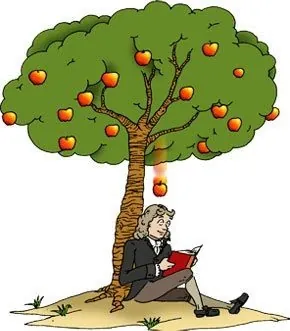
AI can't pass on a passion for physics. Only you can tell the story of Newton under the apple tree or spark curiosity about “what would happen if…”
Geography: AI maps the world
Examples:
- Forecasting climate change
- With AI such as Google Earth Engine, students analyze real data on melting ice in Antarctica or deforestation in the Amazon. The system generates interactive maps and forecasts for the next 50 years.
- The teacher leads debates: “What can we do today to prevent this?”
- Virtual field trips
- Through AI-powered platforms such as Google Expeditions, students “travel” to the Great Barrier Reef or the Sahara Desert, while the system provides facts about the ecosystems in real time.
Why shouldn't teachers be afraid?
AI doesn't have your ability to turn dry data into stories. Only you can make students feel the magic of the world.
Biology: AI unravels the secrets of DNA
Examples:
- Virtual dissections and 3D models
- Platforms such as BioDigital use AI to create interactive 3D models of the human body. Students “examine” organs or trace the circulation of blood, while AI explains their functions.
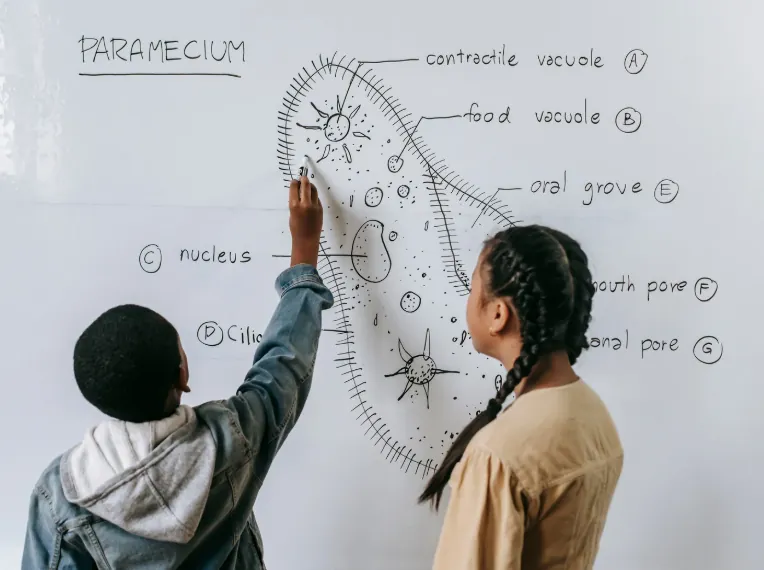
- The teacher saves time drawing diagrams on the board and concentrates on discussions about the ethics of genetic engineering.
- Ecosystem analysis
- AI tools such as iNaturalist identify species of plants and animals from photos students take on field trips.
Why shouldn't teachers be afraid?
AI doesn't have your ability to inspire wonder – to show how evolution is poetic and cells are miniature universes.
Literature and languages: AI as a creative partner
- Generating plots for analysis
- The teacher uses ChatGPT to create short stories in specific styles (e.g. “write a story in the style of Hemingway where the heroine loses her keys”). Students analyze how AI imitates the author and discuss where the system has missed the “human” detail.
- Personalized language learning
- Apps such as Duolingo use AI to create dialogues with characters that adapt to the student's interests (e.g. if they like football, the dialogues are about matches).
Why shouldn't teachers be afraid?
AI won't appreciate the poetic brilliance of a verse – only a person can convey how a metaphor shakes the soul.

How not to be afraid? Three rules for teachers
- AI is like the calculator
- The calculator didn't replace math – it made it more accessible. In the same way, AI will automate routines to free up time for meaningful teaching.
- You control the technology
- AI is a tool that works on your instructions. You decide when to use it and how to integrate it into lessons.
- Your role becomes more important
- When AI takes over the boring tasks, you become a mentor, creative director and motivation manager.
Conclusion: The teacher as conductor of the AI orchestra
AI won't replace the teacher, because education isn't just the transfer of information – it's nurturing curiosity, cultivating emotional intelligence and building relationships.
An example of an ideal lesson with AI:
- Students solve math problems with a personalized AI assistant.
- The teacher analyzes the data from the system and finds that 60% of the class doesn't understand fractions.
- Instead of going over the theory again, they organize a game: students divide a pizza into slices using an AI-generated 3D model and compete to solve problems.
- AI processes the results, and the teacher celebrates the successes with them.
The future is here: AI is the bridge, and the teacher is the architect who decides where to direct it.
On the Artec Robotics “News” page you will find a variety of articles and guides on robotics and automation. Here you'll find useful information about the latest technologies, software solutions and programs that will help you dive deeper into the world of industrial robots and automated systems.
Follow the news from Artec Robotics!
MAKE AN INQUIRY