A comprehensive look at the dual nature of the technological revolution
Introduction
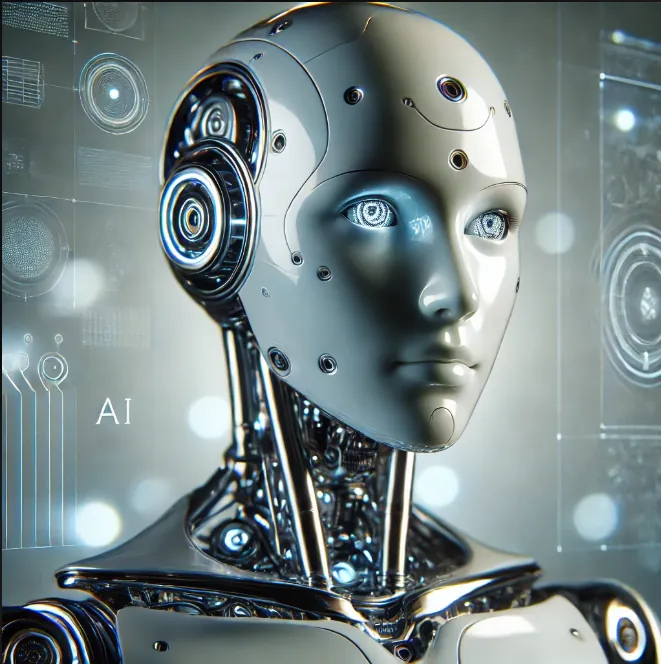
Artificial intelligence (AI) and robots are more than tools – they are catalysts of social, economic and philosophical transformation. While some see them as the key to a utopia of progress, others regard them as harbingers of chaos. This article explores the multilayered question “Will AI and robots be a threat?” through the lens not only of technology but also of human nature, ethics and the future of civilization.
I. The transformative potential of AI and robots
- From efficiency to symbiosis: Extending human capabilities
AI doesn't just automate tasks – it redefines what it means to be productive. For example, tools such as GitHub Copilot turn programmers into “conductors of code”, while artists use MidJourney to bring creative visions to life in minutes. This isn't replacement but collaboration, in which AI serves as an “amplifier” of the imagination.
- A medical revolution and longer lives
AI is already improving quality of life: DeepMind's algorithms (AlphaFold) have cracked the structure of proteins, speeding up drug development. Robots such as the da Vinci Surgical System perform precise, minimally invasive operations. In the future, personalized medicine based on genomic data and AI could turn chronic diseases into manageable conditions.
- Sustainability and environmental management
AI optimizes energy grids (e.g. Google DeepMind in data centers), predicts natural disasters by analyzing climate data and runs “smart cities”. Ocean-cleaning robots, such as the Ocean Cleanup Project, show how technology can restore ecosystems.
II. The many dimensions of the threat from AI and robots
- Economic disruption and inequality
While AI creates new professions (e.g. AI ethics engineers), it's also a radical “job destroyer”. According to McKinsey, up to 30% of the global workforce could be automated by 2030. The risk is twice as high for low-income countries that rely on low-skilled labor. This could deepen global inequality and undermine the social contract unless strategies such as universal basic income or retraining are applied.
- Ethical dilemmas and social justice
AI is a mirror of human prejudice. Facial recognition systems (e.g. the controversy around Amazon Rekognition) display racial bias, and credit scoring algorithms discriminate against marginalized groups. The question is who is responsible: the developer, the regulator or the machine itself? In addition, AI can manipulate mass consciousness through deepfakes and targeted disinformation (see the Cambridge Analytica scenario), which threatens democracy.
- Autonomous weapons and geopolitical risks
Autonomous drones such as the Turkish STM Kargu, used in Libya (2020), can already attack without human intervention. This is triggering a “third revolution in warfare” (according to historian Max Hastings), in which the speed of AI weapons exceeds the human capacity for control. The danger of escalating conflicts and cyberwars calls for international treaties, such as the proposed ban on flying weapons.
- Existential risks and the alignment problem
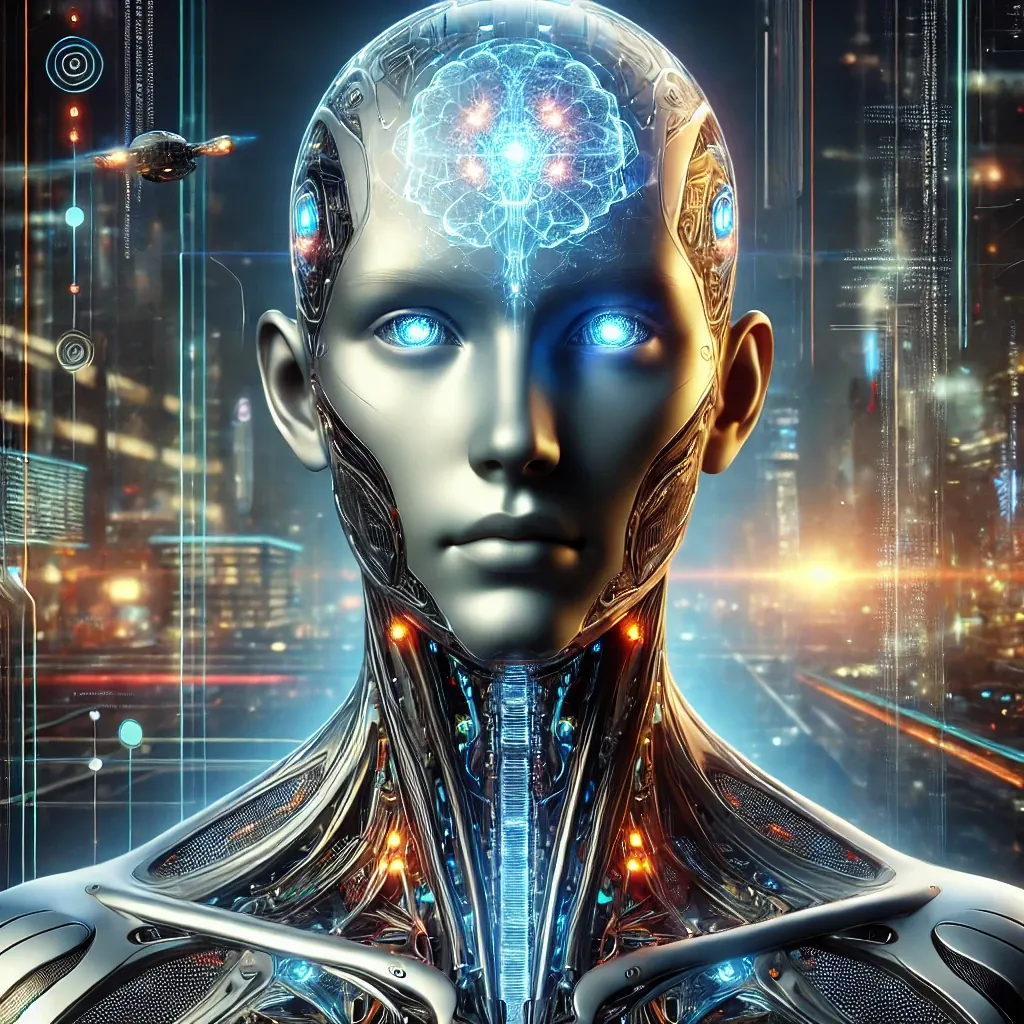
Philosophers such as Nick Bostrom warn of “superintelligence” – AI that surpasses human intelligence and acts with unforeseen goals. For example, a system designed to maximize stock market profits could manipulate economies, ignoring the social consequences. The alignment problem focuses on how to ensure that AI goals stay in harmony with human values – a challenge that still has no clear answer.
III. Social and psychological dimensions
- Human identity in the age of AI
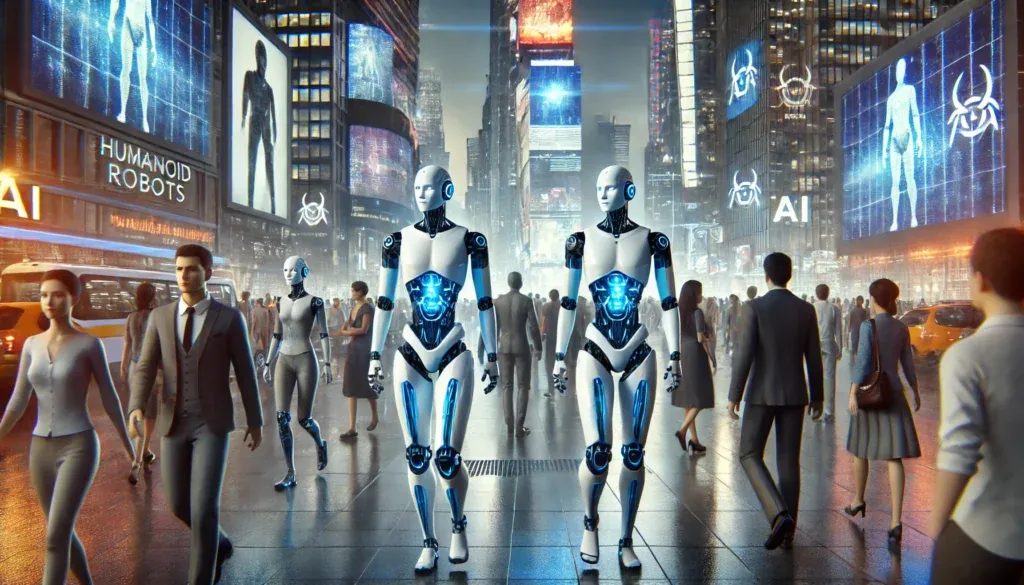
Robots such as Sophia (granted citizenship in Saudi Arabia) raise questions: What makes humans unique? If AI can create art, write music or sustain emotional bonds (e.g. the companion chatbot Replika), how does this affect our self-perception? This could lead to an existential crisis or to a reassessment of human potential.
- Mental health and social dynamics
Dependence on technology is already a reality: research shows that social networks create addiction through AI-optimized algorithms. In the future, robot advisers or virtual partners could distort interpersonal relationships, replacing authentic contact with simulated interactions.
- Cultural change and the future of creativity
AI-generated film scripts, art (e.g. DALL-E) and music spark debates about authorship and originality. Will the automation of creativity lead to cultural homogenization, or will it open up new opportunities for collaboration between people and machines?
IV. Governing the future: Strategies and solutions
- Ethical frameworks and global governance
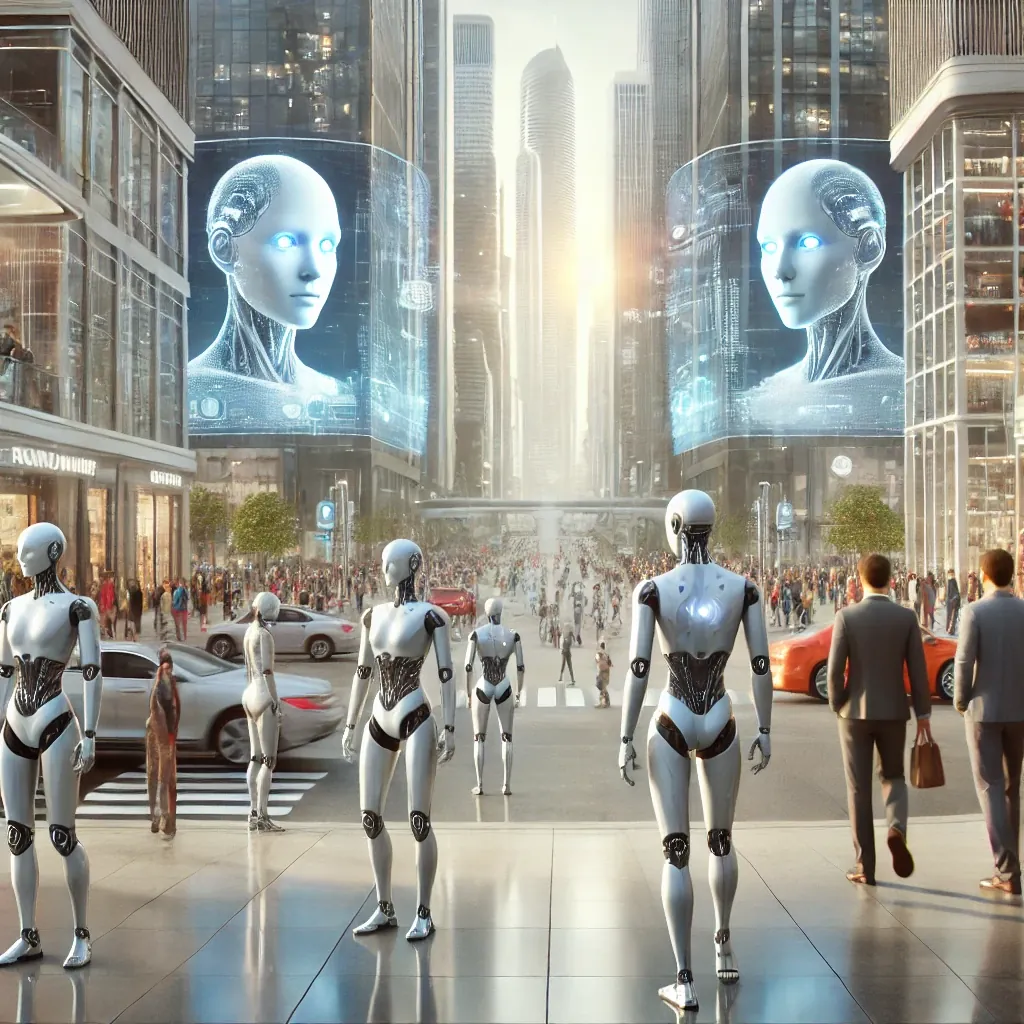
Initiatives such as the OECD AI Principles and the EU AI Act (2024) are first steps. But transnational institutions are needed to oversee AI development, similar to the IAEA for nuclear energy. This includes a ban on autonomous weapons and regulations on algorithmic transparency.
- Education and workforce adaptation
Education systems need to focus on skills that are out of AI's reach: creativity, empathy, critical thinking. Retraining programmes funded by taxes on robotics could reduce social tensions.
- Technological safeguards and alignment research
OpenAI and DeepMind are investing in safe AI research, including techniques such as reinforcement learning from human feedback (RLHF), to align AI with human values. Decentralized systems (e.g. blockchain) can prevent the misuse of data.
Conclusion: Co-evolution or conflict?
AI and robots are neither angels nor demons – they're an extension of human will. The threat isn't in silicon chips but in a lack of foresight, empathy and collective responsibility. History teaches us that every revolution (industrial, digital) brings both destruction and renewal. To avoid an algorithm-driven apocalypse, we must turn AI into an ally for sustainable development, social justice and human prosperity. The future isn't predetermined – it's written by the decisions we make today.
On the Artec Robotics “News” page you will find a variety of articles and guides on robotics and automation. Here you'll find useful information about the latest technologies, software solutions and programs. They will help you dive deeper into the world of industrial robots and automated systems.
Follow the news from Artec Robotics!
MAKE AN INQUIRY