Where are robots irreplaceable, and when is deploying them a mistake?
In the era of Industry 4.0, automation is no longer a matter of choice but of survival. Even so, deploying robots should never be an end in itself. At Artec Robotics we believe success depends on one key factor: profitability. Before investing in technology, you need to understand where it adds value and where it could turn into an expensive mistake.
1. The sweet spot: Where are robots most useful?
Robots outperform people in tasks that fall into the so-called 3D category (Dull, Dirty, Dangerous):
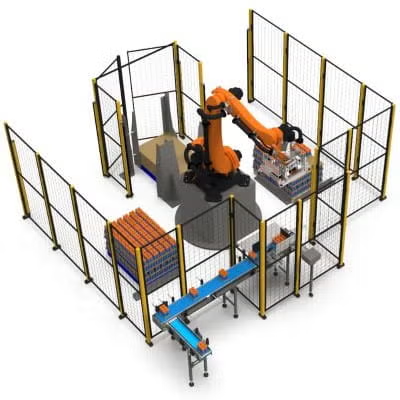
- Monotonous, repetitive tasks: Palletizing, sorting and packing. Here speed and the absence of fatigue are key to high productivity.
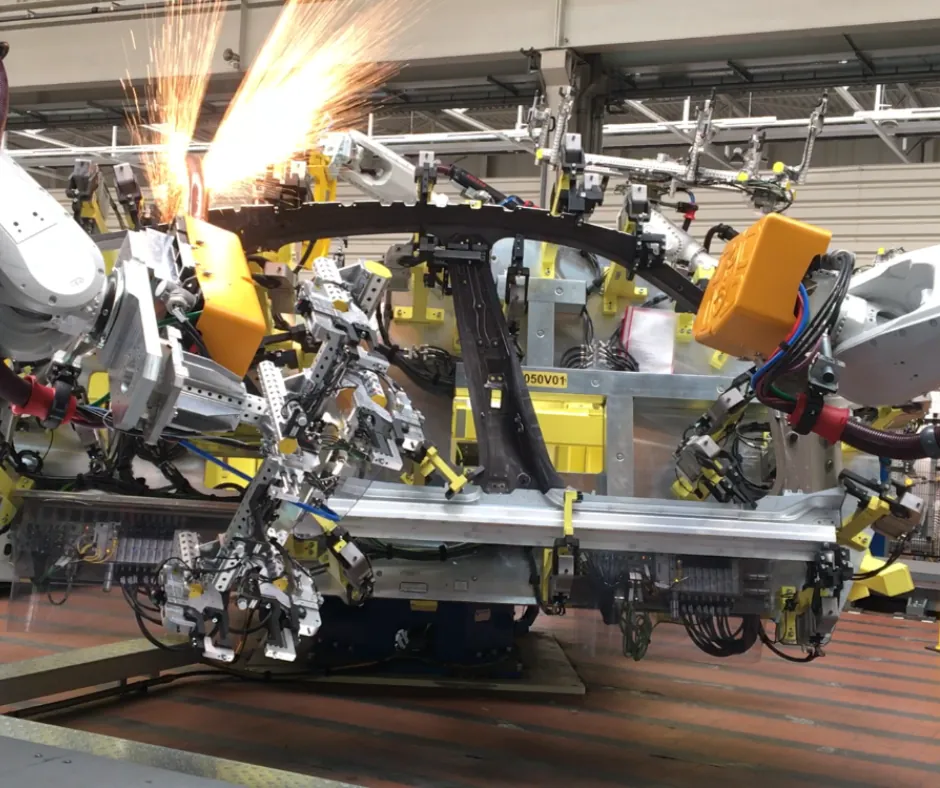
- Work in hazardous environments: Welding, painting (toxic fumes), working with high temperatures or aggressive chemicals.
- High precision: Assembling microelectronics or laser cutting, where the human hand can't achieve the same repeatability down to the micron.
2. The challenge of adaptability: When does a robot become a burden?
Automation is not a universal solution. There are areas where the human factor remains more cost-effective because of our ability to adapt to change:
- Changes in geometry and parts: A robot works to strictly defined coordinates. If your product changes often or the geometry of the blanks varies, the robot loses its efficiency. Every change requires new settings, calibration and reprogramming.
- Low volumes with high variety: If you produce 10 different parts in small batches, the cost of changeovers and the time the machine stands idle waiting for new instructions can make the investment pointless. A person can switch tasks in seconds; a robot needs software and often hardware intervention.
- Creativity and fine judgment: When a non-standard situation or a subtle visual defect arises, a robot often stops or keeps producing scrap. People have the perception and the capacity to solve problems in real time.
3. Profitability: Why is series production a must for welding?
Deploying a robot is a serious investment, and before starting any project we at Artec Robotics always analyze the return on investment (ROI). The key to success is repeatability. For a welding robot to be profitable, the business must have strict series production. The welding process requires absolute synchronization between all the elements involved:
- The product: Must have constant dimensions. Any deviation of millimeters means the weld seam won't be in the right place.
- The position: The part must be presented to the robot the same way every time, in the same coordinate system.
- The environment: Tools and fixtures must be fixed in place.
If you don't have large batches of identical parts, the time needed to adjust the robot to the new parameters will exceed the time for manual welding. A robot is an investment in scale, not in individual flexibility.
4. Collaborative robots: A flexible solution or a compromise?
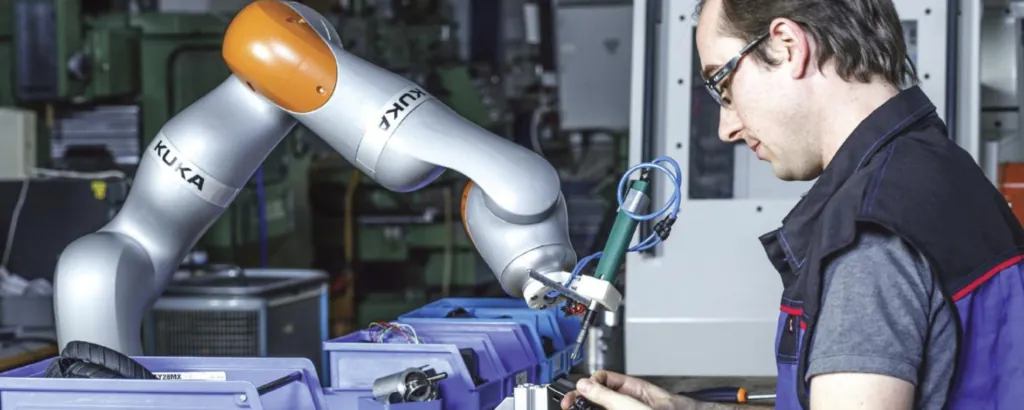
Cobots are designed to work shoulder to shoulder with people without safety fences. They're easier to program, but there are some important “catches”:
- The illusion of speed: To stay safe, a cobot moves significantly slower than a standard industrial robot. This can make it a bottleneck on the line.
- Safety depends on the tool: If the cobot is holding a sharp part or a hot torch, it's no longer safe. In that case barriers and sensors are needed again, which cancels out its space-saving advantage.
- Payload and precision: Cobots are lighter and not suited to handling heavy parts or processes requiring great force (e.g. heavy milling).
- Expertise: Marketing claims anyone can program them, but integration with other machines and complex cycles still requires an “Expert”-level specialist.
5. Hidden costs and the “automation at any cost” mistake
The investment doesn't end with buying the machine. You need to plan for maintenance, consumables and, above all, training. The most common mistake is automating an inefficient process. All that achieves is “producing defects faster”. A robot is only as good as the specialist who runs it.
6. The role of training (“Expert” certificate)
This is exactly where the strength of our training center in Dimitrovgrad lies. Investing in a robot without preparing your staff is half wasted. Through our industrial robotics courses we train specialists who know how to set up the process so that the technology works for the company's profitability instead of becoming an expensive monument on the shop floor.
Automation is the future, but it requires discipline in production. At Artec Robotics we believe success lies in the right judgment: we automate the serial, heavy and precise tasks, and leave the flexibility to people.
📋 Checklist: Is your production ready for a robot?
Before you invest, check how many of the following statements apply to your process. If you answer “YES” to most of them, automation will be highly profitable for you.
- [ ] Series: Do you produce large batches of identical parts (more than 1,000 units per month)?
- [ ] Repeatability: Do the parts you process have constant geometry and dimensions without significant deviations?
- [ ] Fixed position: Can the part be presented in the same place every time, accurate to the millimeter?
- [ ] Environment: Does the process involve tasks that are dangerous, harmful or too monotonous for your staff?
- [ ] People: Do you have someone on your team with the technical potential to be trained to “Expert” level to run the system?
- [ ] Infrastructure: Do you have a stable power supply and a prepared space that meets the safety requirements?
Result:
- 4-6 “YES” answers: You're an ideal candidate for industrial robotics. The investment will probably pay off quickly.
- 1-3 “YES” answers: Your production is specific. A collaborative robot or partial automation may be a better solution.
0 “YES” answers: Manual labor is probably more cost-effective for you at the moment. Focus on optimizing your processes before buying a robot.
On the Artec Robotics “News” page you will find a variety of articles and guides on robotics and automation. Here you'll find useful information about the latest technologies, software solutions and programs. They will help you dive deeper into the world of industrial robots and automated systems.
Follow the news from Artec Robotics!
MAKE AN INQUIRY