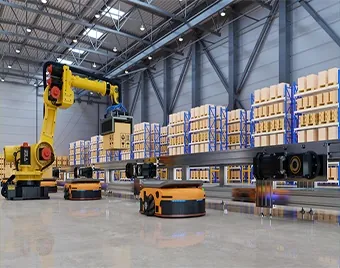
Robotics in food production and processing
In food processing plants, robotics is indispensable for performing repetitive, monotonous and often dangerous tasks that used to rely on human labor.
- Greater precision and consistency: Industrial robots can cut, mix, cook and assemble food products with exceptional consistency and precision, exceeding human capabilities. This guarantees product uniformity and reduces errors.
- Improved food safety: Minimizing human contact with food products significantly reduces the risk of contamination with pathogens. Robots can work in sterile environments and withstand high temperatures and aggressive cleaning agents, which makes it easier to maintain impeccable hygiene. Computer vision systems can inspect every piece of food for defects or foreign bodies.
- Flexibility and adaptability: Modern robots are programmed to adapt to different products, recipes and batch sizes. Collaborative robots (cobots), which can work safely side by side with people, are becoming increasingly popular, offering flexibility and higher productivity without the need to completely transform the production line.
Intelligent packaging and quality control systems
Packaging isn't just protection for the product but a key stage that guarantees freshness, shelf life and appeal. Intelligent packaging systems are at the forefront of innovation.
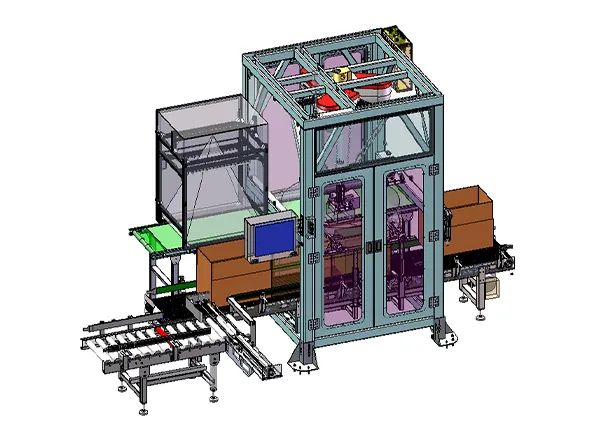
- Automated packaging lines: Packaging robots can quickly adapt to different product formats and sizes, allowing greater flexibility and shorter changeover times between production runs. This is especially important in an industry with rapidly changing consumer preferences.
- Integrated quality control: Automated packaging lines increasingly integrate advanced quality control technologies. X-ray inspection and computer vision detect contaminants (metal, glass, plastic), product defects (for example, the wrong shape or color) and labeling errors, ensuring that only high-quality, safe products reach the consumer.
- Smart packaging: Although still at an early stage, the concept of smart packaging uses sensors and indicators that track the temperature, humidity and freshness of food in real time, warning consumers and retailers of potential problems.
Automated logistics and distribution: From the warehouse to the customer
Automation is also transforming food logistics and distribution, making the supply chain faster, more efficient and more traceable.
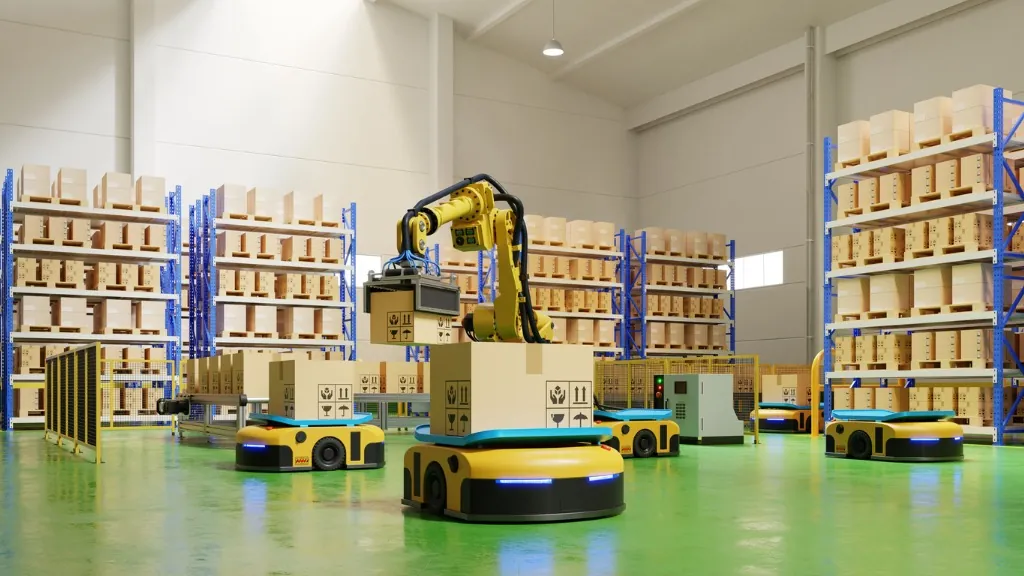
- Automated warehouses and management systems: Modern food warehouses use sophisticated warehouse management systems (WMS) combined with automated storage and retrieval systems (AS/RS) and order-picking robots. These systems optimize space, reduce order-picking errors and work 24/7, ensuring products are processed and dispatched quickly. Autonomous mobile robots (AMRs) are also used to transport pallets and goods around the warehouse.
- Route optimization and tracking: Automated route planning systems and GPS tracking ensure the most efficient delivery, reducing fuel consumption and carbon emissions. Technologies such as blockchain are applied for greater transparency and traceability of food along the entire supply chain, which is essential for product recalls or safety problems.
Autonomous vehicles and drones: Although still in development and regulation, autonomous trucks and drones are emerging as the future of delivery, especially for the “last mile” in urban and rural areas. They promise faster, more efficient and potentially cheaper distribution solutions.
Benefits, challenges and future prospects
The benefits of automation and robotics in food production are many and significant:
- Higher efficiency and productivity: Leads to lower production costs and more competitive market prices.
- Better product quality and consistency: Ensures consumers get safe, fresh, quality products every time.
- Stronger food safety: Reduces the risk of contamination and human error.
- Better working conditions: Automation takes over repetitive, physically demanding or dangerous tasks, freeing staff for more complex and cognitive activities.
- Sustainability: Optimizing resources and reducing waste contribute to more sustainable food production.
Despite these advantages, deploying these technologies also comes with a number of challenges:
- High initial investment: The costs of purchasing and installing robotic systems can be significant, especially for small and medium-sized businesses.
- The need for specialized skills: Integrating and maintaining automated systems requires staff with new technical skills, which calls for investment in training and retraining.
- Impact on employment: There are concerns about some manual tasks being taken over by machines. However, history shows that technological progress often creates new jobs in areas such as robot maintenance, software development, data analysis and managing complex systems.
Conclusion
In conclusion, automation and robotics are not just redefining the food industry but actively driving it toward a more efficient, safe and sustainable future. From field to table, every stage of the supply chain benefits from the precision, efficiency and flexibility these technologies offer. As the industry continues to evolve, it's crucial to tackle the related challenges and maximize the benefits to ensure a thriving future for food production that meets the needs of a growing world population.
On the Artec Robotics “News” page you will find a variety of articles and guides on robotics and automation. Here you'll find useful information about the latest technologies, software solutions and programs that will help you dive deeper into the world of industrial robots and automated systems.
Follow the news from Artec Robotics!
MAKE AN INQUIRY