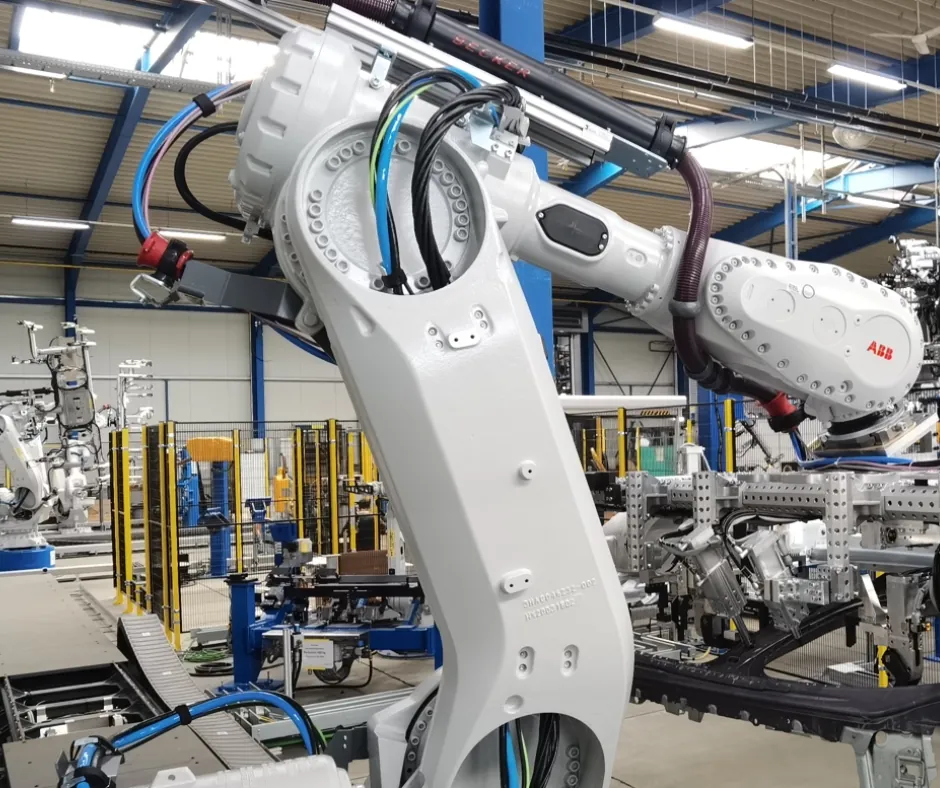
Which production processes are best suited to robotization?
In today's manufacturing landscape, robotization is no longer a luxury but a necessity for achieving high efficiency, quality and competitiveness. Although almost every process can benefit from some form of automation, some production operations are especially well suited to deploying robots because of their repetitiveness, precision, danger or need for high throughput. Understanding which processes are best suited to industrial robotization is the key to successful deployment and maximum return on investment.
Main criteria for robotization
Before diving into specific examples, it's important to understand the general criteria that make a production process an ideal candidate for deploying robots:
- Repetitiveness and uniformity: Tasks that are performed many times in the same way. Robots are unrivaled at routine operations.
- High precision and repeatability: A need for exceptional accuracy and consistency. Robots can repeat movements with millimeter precision.
- Hazardous or unhealthy environment: Workplaces that expose people to the risk of injury, harmful substances, extreme temperatures or heavy physical strain.
- High production rates: A continuous, fast and efficient workflow is needed.
- A need to reduce costs: Optimizing labor, minimizing waste and increasing throughput.
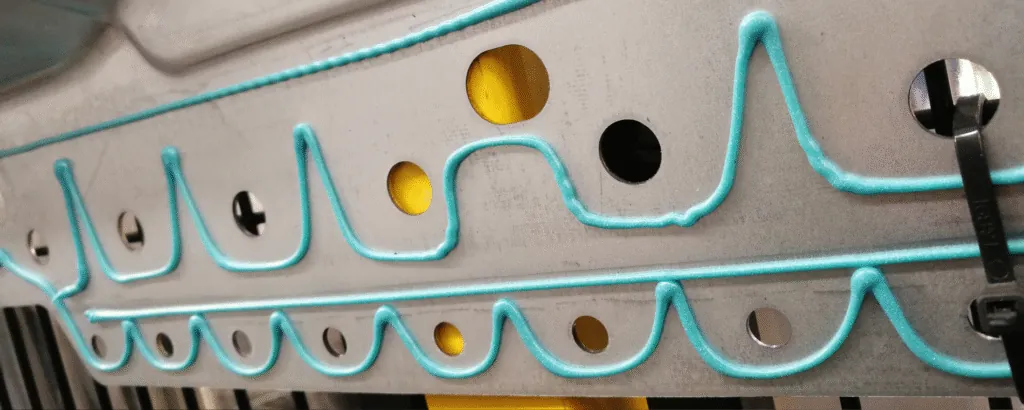
Production processes ideal for robotization
Let's take a closer look at specific applications where robots optimize production tasks:
Welding (Arc Welding)
Welding was one of the first and most successful processes to be robotized. Manual welding requires high skill, is monotonous and exposes workers to fumes, sparks and UV radiation.
- How robots optimize it:
- Precision and quality: Robots produce extremely uniform and strong welds, reducing defects.
- Higher productivity: They work continuously without fatigue, significantly increasing production volume.
- Safety: They remove people from a hazardous environment.
- Repeatability: They guarantee identical quality for every weld.
- Typical applications: The automotive industry, metal structure fabrication, heavy engineering.
Palletizing and Depalletizing
Palletizing is the process of stacking products on pallets, and depalletizing is the reverse. These are repetitive, physically demanding tasks, often involving lifting heavy loads.
- How robots optimize it:
- Ergonomics and safety: They eliminate the risk of injuries related to lifting and twisting.
- Speed and efficiency: They work quickly and without breaks, maintaining a steady flow.
- Flexibility: They can handle different sizes and types of packaging, adapting to changing requirements.
- Space optimization: Some robotic systems take up less space.
- Typical applications: The food industry, logistics, beverage production, pharmaceuticals.
CNC Machine Tending
CNC machine tending involves loading and unloading parts from metalworking machines (mills, lathes, grinders). It's a repetitive and often dirty task.
- How robots optimize it:
- Continuous operation: They keep the machines running 24/7, without interruption.
- Higher precision: They ensure parts are positioned correctly, reducing scrap.
- Safety: They remove the need for operators to approach running machines.
- Efficient use of resources: They free up skilled operators for more complex tasks such as programming and setup.
- Typical applications: Metalworking, the automotive industry, component manufacturing.
Painting and Coatings
Painting and coating processes are hazardous because of fumes, toxic chemicals and the need for a perfectly even finish.
- How robots optimize it:
- High quality and consistency: They apply the coating evenly, without spots or gaps.
- Health and safety: They eliminate people's exposure to harmful substances.
- Lower material consumption: More precise application means less waste.
- Higher speed: They complete tasks much faster than a person.
- Typical applications: The automotive industry, furniture manufacturing, aviation.
Assembly Operations
Assembly operations can range from simple to extremely complex. Robots are especially effective at repetitive, precise assembly tasks.
- How robots optimize it:
- Precision and reliability: They ensure components are assembled correctly and accurately.
- Higher speed: They carry out tasks at a constant, high speed.
- Flexibility: With the right fixtures and programs, a single robot can perform many assembly operations.
- Quality: They reduce human errors and defects.
- Typical applications: Electronics, the automotive industry, household appliance manufacturing.
Pick and Place
Pick and Place is a general term for moving objects from one place to another. It's an extremely repetitive and often high-speed task.
- How robots optimize it:
- Speed and accuracy: They can handle thousands of components an hour with high precision.
- Eliminating monotony: They free people from boring and tiring tasks.
- Handling small or delicate components: Specialized grippers can handle even the most sensitive items.
- Typical applications: Electronics, pharmaceuticals, the food industry.
Challenges and the future
Despite the obvious advantages, deploying robotization requires careful planning, investment and training. The key is choosing the right technology and ensuring cooperation between people and machines.
The future of manufacturing lies in this symbiosis. Industrial automation doesn't mean the end of human labor but its evolution. By delegating repetitive and dangerous tasks to robots, companies can free up human potential for innovation, supervision, programming and strategic decision-making, ensuring thriving and sustainable production.
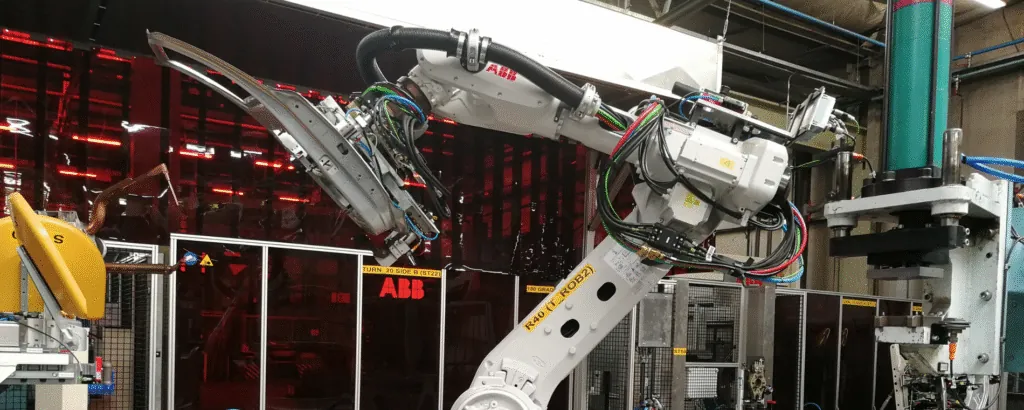
On the Artec Robotics “News” page you will find a variety of articles and guides on robotics and automation. Here you'll find useful information about the latest technologies, software solutions and programs. They will help you dive deeper into the world of industrial robots and automated systems.
Follow the news from Artec Robotics!
MAKE AN INQUIRY