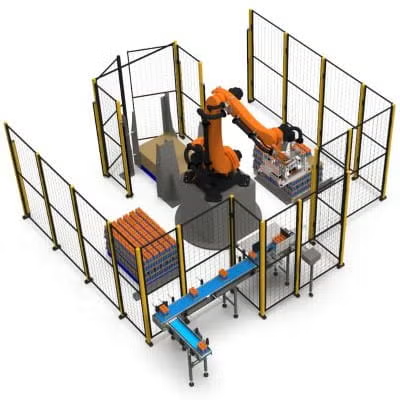
A guide for small businesses with real steps and ROI calculations
In today's dynamic and competitive manufacturing landscape, automation is no longer a luxury reserved for industry giants. Small and medium-sized enterprises (SMEs) increasingly realize that investing in robotic technology is a strategic move that can dramatically improve their productivity, quality and profitability. A common misconception is that automation requires huge upfront capital. In reality, with proper planning and a focus on one well-chosen robotic cell, even a workshop with a limited budget can achieve impressive results.
This article is a guide for small businesses that want to take their first steps in automation, showing how a single robotic cell can have a big impact, backed by real steps and return on investment (ROI) calculations.
Why do small and medium-sized businesses need automation?
Before diving into the “how”, let's understand the “why”. SMEs face unique challenges:
- High labor costs: Rising wages and a shortage of skilled labor put pressure on the budget.
- The need to stay competitive: Big players have the advantage of scale and automation.
- Inconsistent quality: Manual work often leads to variations in quality and scrap.
- Dangerous or monotonous tasks: Exposing employees to risk or to repetitive, exhausting work.
A single robotic cell can address all these problems at once.
Step 1: Identifying the right task to automate
The key to success with one robot is choosing the right task. Look for a process that:
- Is repetitive and monotonous: Ideal for a robot that never gets tired.
- Takes a lot of time: A process that “eats up” a large part of working hours.
- Is physically demanding or dangerous: To protect employees.
- Leads to a high scrap rate or variable quality: The robot provides precision.
- Is a bottleneck in production: It prevents the whole process from running faster.
Examples of ideal first tasks:
- Welding: Many repetitive seams and a need for high precision and consistency.
- Palletizing/Depalletizing: Lifting and stacking heavy objects.
- Machine Tending: Loading and unloading parts from CNC machines, presses, etc.
- Painting/Coatings: Applying materials evenly.
- Assembly: Simple, repetitive assembly operations.
Step 2: Choosing the right robotic cell and partner
Once you've identified the task, the next step is choosing a solution. This is where companies like Artec Robotics, which offer modular and flexible robotic cells, can help.
What to look for:
- Modularity: The cell should be easy to adapt to different tasks in the future.
- Size and ergonomics: It should fit into your workshop space.
- Easy integration: It should be able to connect to existing machines.
- Support and training: A reliable supplier that offers full after-sales support. Artec Robotics is a good example, as it provides training and support, which is critical for a small business without its own team of robotics engineers.
- Price: Of course, it has to fit the budget. Modular cells are often more cost-effective.
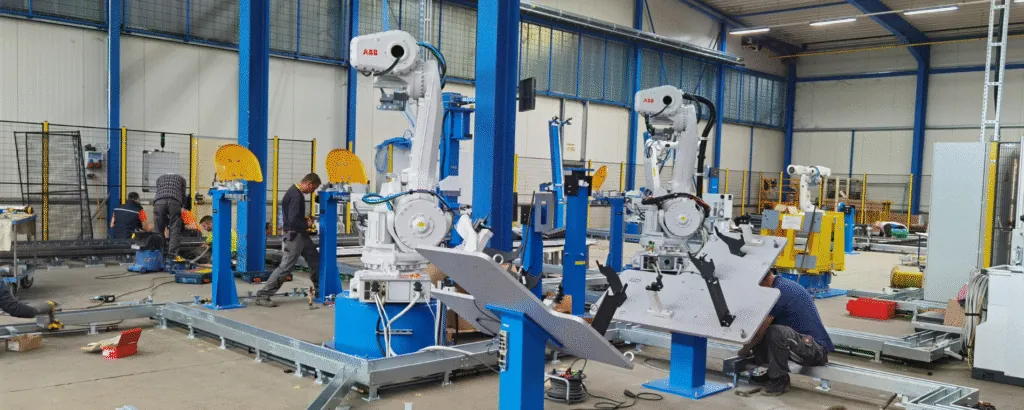
Step 3: Planning the deployment
Even for a single cell, good planning is essential.
- Workflow analysis: How will the robot fit into the existing production process? Will the layout need to change?
- Safety: Provide adequate protective measures (fences, sensors, emergency stops). This is mandatory!
- Staff training: Your employees need to be trained to work with the system, not to fear it. Show them how the robot will help them, not replace them.
- Integration: Plan how the robot will communicate with other machines or systems (e.g. conveyors, CNC machines).
Step 4: Calculating ROI (return on investment)
This is the most important part for any business, especially SMEs. Let's look at an example scenario:
Example: Automating a welding process with 1 robotic cell
Let's assume your workshop currently performs welding operations manually, which involves:
- Labor costs: 2 welders working 8 hours a day, 5 days a week.
- Monthly gross salary of a welder (including social contributions): BGN 2,500 * 2 = BGN 5,000
- Annual labor costs: BGN 5,000 * 12 = BGN 60,000
- Output: 2,000 welds per month (manual).
- Scrap/rework: 5% scrap (needing rework or disposal).
- Effective working time: Manual welders actually weld 6 hours a day (breaks, setup, fatigue).
Investment in an Artec Robotics robotic cell (approximate figures):
- Price of the robotic cell: Let's assume a mid-range value of BGN 140,000 (including robot, controller, welding equipment, safety equipment, installation and basic training).
- Additional (initial) costs: BGN 5,000 (for consumables, tools and minor workshop modifications).
- Total initial investment: BGN 145,000
After deploying the robotic cell:
- Staff: One welder can be retrained as a robot operator and quality inspector, and the other redirected to other important tasks that have been falling behind (e.g. part preparation, complex manual welds that can't be automated). In our case, we free one welder from repetitive tasks.
- Annual labor costs saved: BGN 2,500/month * 12 months = BGN 30,000 (from redirecting/not hiring one welder for this task).
- Output: The robot can work 24/7. Let's assume 16 hours of effective work a day (two shifts, no fatigue, minimal pauses).
- Increased monthly output: From 2,000 welds (manual) to 4,000-5,000 welds (robot) at the same or higher quality. Let's conservatively assume 4,000 welds/month.
- Scrap/Rework: Falls from 5% to 1% or less.
- Scrap costs saved: If one weld costs BGN 5 (materials + labor), 4% saved = 4% * 5,000 welds * BGN 5 = BGN 1,000/month = BGN 12,000/year.
- Quality: Better reputation, fewer complaints. Hard to put a figure on, but significant.
- Energy costs/Maintenance: About BGN 500/month for the robot's electricity and consumables = BGN 6,000/year.
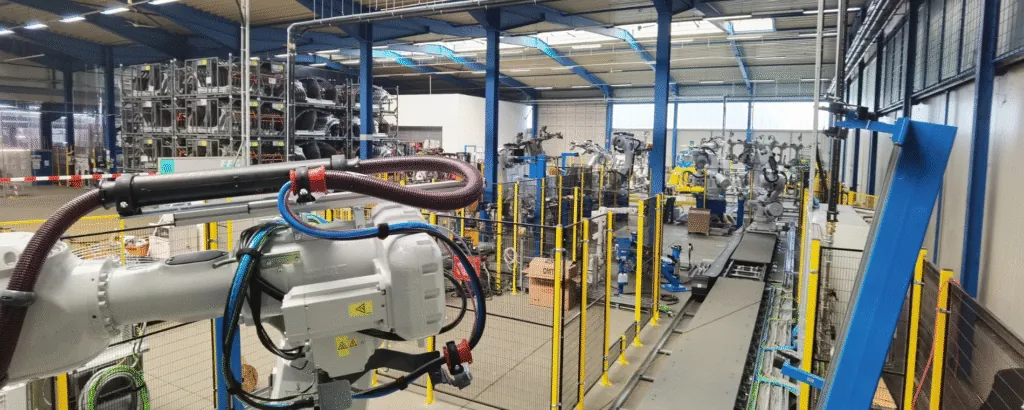
ROI calculation:
- Initial investment: BGN 145,000
- Annual savings/revenue:
- Labor costs saved: BGN 30,000
- Scrap costs saved: BGN 12,000
- Additional revenue from increased output: If the selling price of a weld is BGN 10 (with margin) and you increase output by 2,000 welds/month = 2,000 * BGN 10 * 12 months = BGN 240,000 (this effect is hard to realize without other changes, but it's the potential). For a more conservative ROI, let's focus only on savings and assume these extra units simply replace outsourcing or lost orders, or give you faster delivery and more capacity. Let's say the 2,000 extra welds a month bring you a net profit (after material costs but excluding labor) of BGN 2 per weld. Then 2,000 * BGN 2 * 12 months = BGN 48,000 additional profit/year.
- Total annual benefits: BGN 30,000 (labor) + BGN 12,000 (scrap) + BGN 48,000 (extra profit from capacity) = BGN 90,000
- Annual robot costs: BGN 6,000 (energy/maintenance).
- Net annual benefits: BGN 90,000 – BGN 6,000 = BGN 84,000
Calculating the payback period:
- Payback Period = Initial investment / Net annual benefits
- Payback Period = BGN 145,000 / BGN 84,000/year ≈ 1.73 years (about 1 year and 9 months)
Calculating ROI (Return on Investment):
- ROI = (Net annual benefits / Initial investment) * 100%
- ROI = (BGN 84,000 / BGN 145,000) * 100% ≈ 57.93% per year
ROI conclusion: In this example, despite the higher price of the cell, the investment in a robotic cell pays for itself in less than two years, and the annual return is almost 58%! This again shows that even with one cell, the impact can be huge and extremely profitable in the long term.
Step 5: Continuous improvement and scaling
After successfully deploying the first cell:
- Monitoring and optimization: Track the robot's performance and look for ways to optimize further.
- Expanding skills: Train more employees to work with the robot and carry out basic operations and maintenance.
- Planning for the future: Once convinced of the benefits, you can start thinking about automating other processes or adding more robotic cells.
Automating with one robotic cell is a completely feasible and extremely effective strategy for small and medium-sized businesses. It not only brings significant financial benefits by reducing costs and increasing capacity, but also improves product quality, workplace safety and the company's overall competitiveness.
With the right partner, like Artec Robotics, offering modular solutions, full support and training, even a “small budget” can lead to a “big impact” and open the door to a more efficient and prosperous future for your workshop. Don't put it off – start exploring your automation options today!
On the Artec Robotics “News” page you will find a variety of articles and guides on robotics and automation. Here you'll find useful information about the latest technologies, software solutions and programs. They will help you dive deeper into the world of industrial robots and automated systems.
Follow the news from Artec Robotics!
MAKE AN INQUIRY