
Clinching — strong joining of metal sheets without heat.
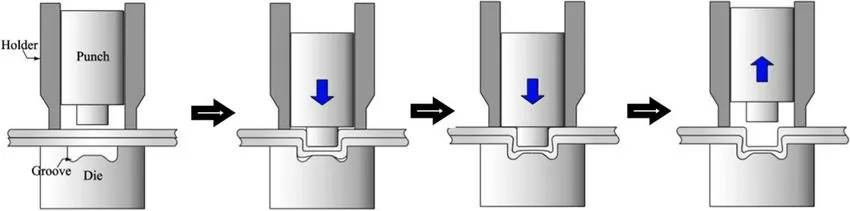
How clinching works:
1. Positioning: The metal sheets are placed on top of each other, with the areas to be joined precisely aligned.
2. Clamping: Specialized tools, such as clinching presses or pliers, hold the sheets in place.
3. Deformation: Pressure is applied to the sheets to deform them and create the desired shape.
4. Interlocking: The deformed areas of the sheets interlock, forming a strong and durable joint.
5. Release: Once the joint is formed, the tools are released, leaving the metal sheets firmly joined.
Key aspects of the process:
- Pressing force: The force and duration of the pressure are key to forming a strong joint.
- Deformation shape: The specific deformation shape (flanges, wedges) determines the strength and characteristics of the joint.
- Material: The properties of the material (thickness, strength) affect the process and the final result.
Types, advantages, applications and the future of clinching
1. Types of clinching:
- Hydraulic clinching: Uses a hydraulic cylinder to generate pressure.
- Pneumatic clinching: Uses compressed air to generate pressure.
- Mechanical clinching: Uses mechanical presses to generate pressure.
2. Advantages of clinching:
- A strong, durable joint: Withstands high loads.
- No heat impact: The material is not deformed or degraded.
- An environmentally clean process: No harmful emissions.
- High productivity: A fast and efficient process.
3. Applications of clinching:
- Automotive: For manufacturing car bodies, chassis, etc.
- Electronics: For manufacturing housings, printed circuit boards, etc.
- Home appliances: For manufacturing washing machines, refrigerators, etc.
- Construction: For manufacturing metal structures, fences, etc.
4. Clinching tools:
- Clinching presses: Manual, pneumatic, hydraulic.
- Clinching pliers: Manual, pneumatic, hydraulic.
- Robotic clinching systems: Automated production.
5. The future of clinching:
- New technologies: More efficient, precise and flexible.
- Process automation: Robotic systems for higher productivity.
Expanding applications: Use in new industries.
Contact us today to get a free consultation and find out how we can help you bring the latest clinching technologies into your business.