How the "Rent a Robot" Model Is Changing Small Business
The era of traditional manufacturing is over. Today managers face constant challenges. Labor shortages, unstable supply chains and the demand for customization are critical problems. For small and medium-sized enterprises (SMEs), these obstacles often seem insurmountable.
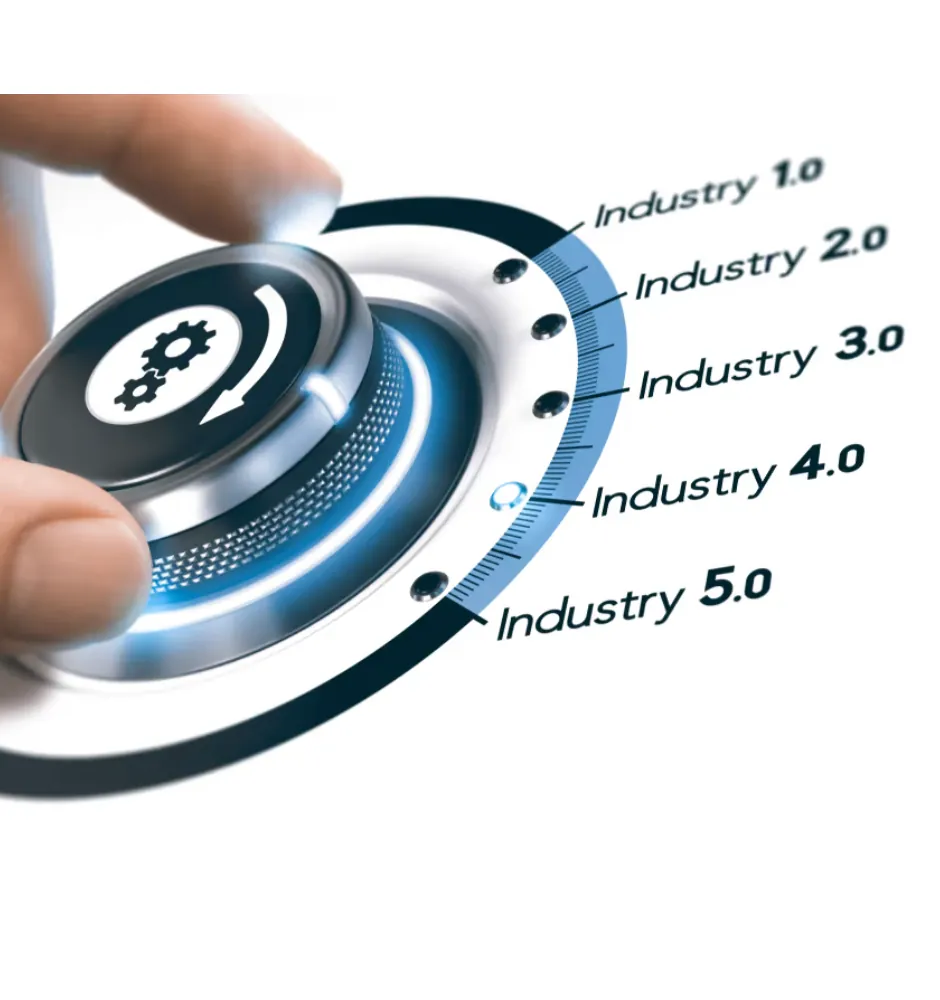
A new approach is emerging: Industry 5.0. It's a powerful solution that doesn't replace people. It augments the human workforce through revolutionary collaboration with machines.
Overcoming the three key production obstacles
Today's production manager is battling a “perfect storm” of problems:
- The labor shortage crisis
Finding and keeping skilled workers is a major challenge, especially for repetitive, physically demanding or dangerous tasks. Companies are often forced to turn down orders, which limits their growth potential. The problem is most acute for SMEs, which lack the resources to compete with large corporations for talent.
- The high capital investment
Historically, the upfront investment in automation has been prohibitive for smaller firms. Buying traditional robots requires specialized technical expertise. This creates a technology divide: large companies automate quickly, while small ones remain less productive.
- The need for flexibility and adaptability
Modern markets demand faster cycles and more customization. Traditional production lines built for mass production are inflexible. They can't quickly adapt to new products. This inflexibility leaves businesses vulnerable to market changes.
The solution: The rise of the robot rental model
The “Rent a Robot” (Robot Rental) model is the most transformative force. It democratizes access to modern robotics. Automation becomes a predictable operating expense rather than a large capital commitment.
Manufacturers can rent a robot for a specific project or period, test its capabilities and achieve immediate productivity gains.
This approach lets SMEs automate specific high-impact tasks. They quickly see a return on investment (ROI). Accessibility levels the playing field, allowing small players to compete more effectively.
The heart of Industry 5.0: Empowering the workforce
The real strength of this new revolution lies in its focus on people. Industry 5.0 doesn't replace human workers. It creates a symbiotic relationship. People and collaborative robots (cobots) work together to enhance each other's capabilities.
Technologies that support people:
- AR/VR training: Augmented and virtual reality speed up training. Employees use AR/VR simulations to learn to work with cobots. This ensures precision and reduces errors.
- Intuitive interfaces: New programming methods remove the barriers. Workers “teach” cobots by physically guiding them through the desired movements. No complex coding is needed.
- AI integration: Artificial intelligence and digital twins provide the intelligence. They let managers optimize workflows before making physical changes. Real-time data analysis increases efficiency and safety.
Industry 5.0 lets employees move from manual labor to more valuable roles. These roles require creativity, problem-solving and critical thinking. Embracing this human-centered vision is an investment in the future of the workforce.
The transformation of human roles
Industry 5.0 turns the role of the human worker on its head. With repetitive, monotonous and dangerous tasks handed over to cobots, employees move on to higher-value activities. These new roles require human judgment, creativity and quick problem-solving. Workers are no longer forced to do manual labor. Instead, they become process supervisors and machine programmers. This change not only increases job satisfaction but also significantly improves the quality of the end product.
A competitive advantage for small business
For SME managers, embracing this model is key to survival. The accessibility of the “Rent a Robot” model lets them react quickly to market changes. They can take on new, customized orders without large capital expenditure. By integrating AI and cobots, a small business can achieve the productivity and flexibility that until recently were reserved for large corporations. Ultimately, Industry 5.0 isn't a luxury. It's an essential investment that provides a competitive advantage in a fast-changing global market.
On the Artec Robotics “News” page you will find a variety of articles and guides on robotics and automation. Here you'll find useful information about the latest technologies, software solutions and programs. They will help you dive deeper into the world of industrial robots and automated systems.
Follow the news from Artec Robotics!
MAKE AN INQUIRY