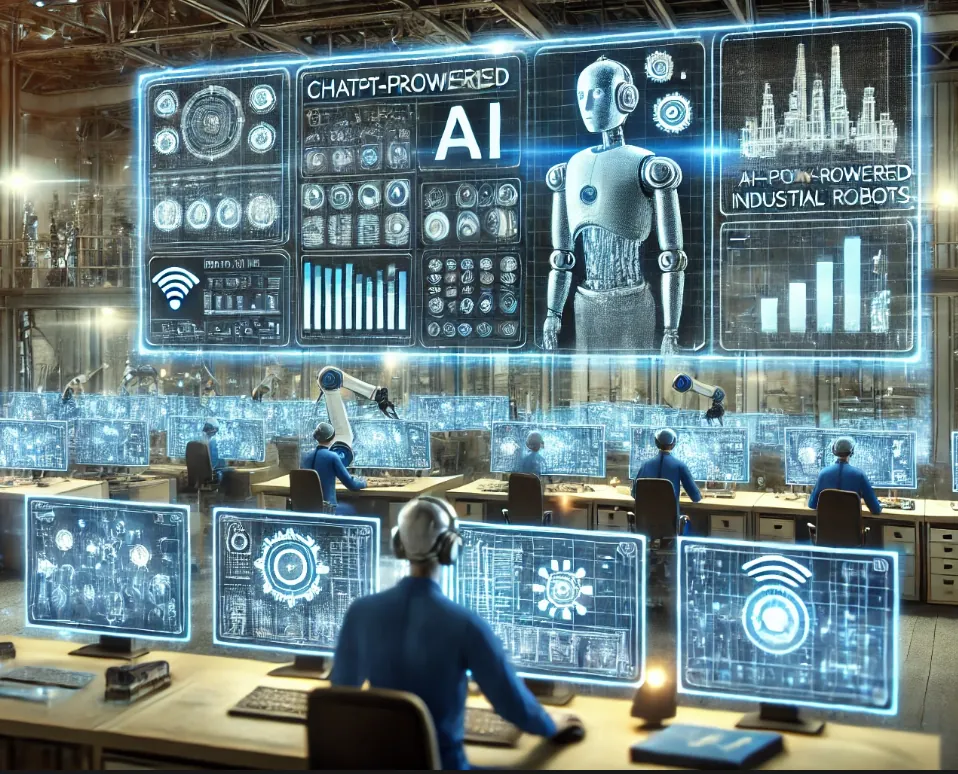
Can it optimize communication between people and robots?
Globally, ChatGPT has become a symbol of the artificial intelligence revolution. But while many associate it with creative writing or chatbots, one of its most overlooked capabilities remains industrial. Could this AI phenomenon transform the way people and robots work together in factories, warehouses and production lines? In this article we look at how natural language models such as ChatGPT can overcome communication barriers in industry and make automation more intuitive, efficient and accessible.
Why is communication between people and robots a challenge?
Today most robots are controlled through:
- Specialized interfaces (HMI panels, PLC programming) that require technical expertise.
- Predefined scenarios that can't adapt in real time.
- Complex software platforms that are inaccessible to ordinary operators.
This leads to:
- Slow response to problems (e.g. if a robot stops, only engineers can diagnose the cause).
- Limited flexibility when tasks change.
- High staff training costs.
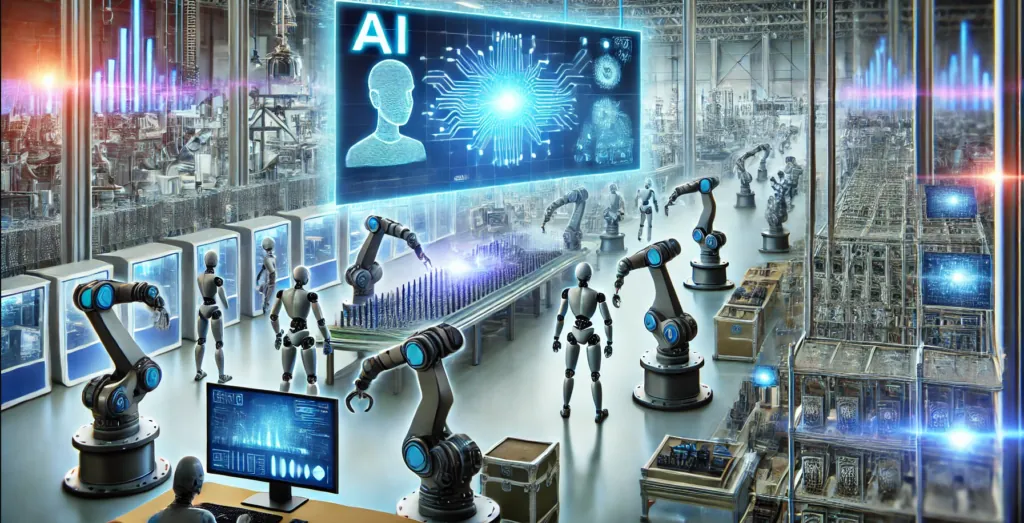
How can ChatGPT transform industrial communication?
Natural language AI isn't just a “chatbot” – it can be a bridge between human language and machine commands. Here are some scenarios:
- Real-time diagnostics and troubleshooting
- Situation: A robot on the production line has suddenly stopped.
- ChatGPT's role: The operator asks: “Why has robot 3 stopped?”. ChatGPT analyzes the system logs and replies: “Temperature sensor error – I recommend checking cable X”.
- Advantage: Reduces dependence on specialists and repair time.
- Training staff through dialogue
- Situation: A new employee needs to learn how to program a cobot.
- ChatGPT's role: The employee asks questions such as: “How do I set the robot to rotate the parts 90 degrees?” and gets steps in plain language, illustrated with screenshots from the software.
- Advantage: Training becomes interactive and personalized.
- Automating documentation and reports
- Situation: Engineers spend hours describing process changes.
- ChatGPT's role: The system automatically generates technical reports based on a dialogue with the user (e.g.: “Summarize the changes made yesterday in cell 2”).
- Advantage: Frees up time for creative tasks.
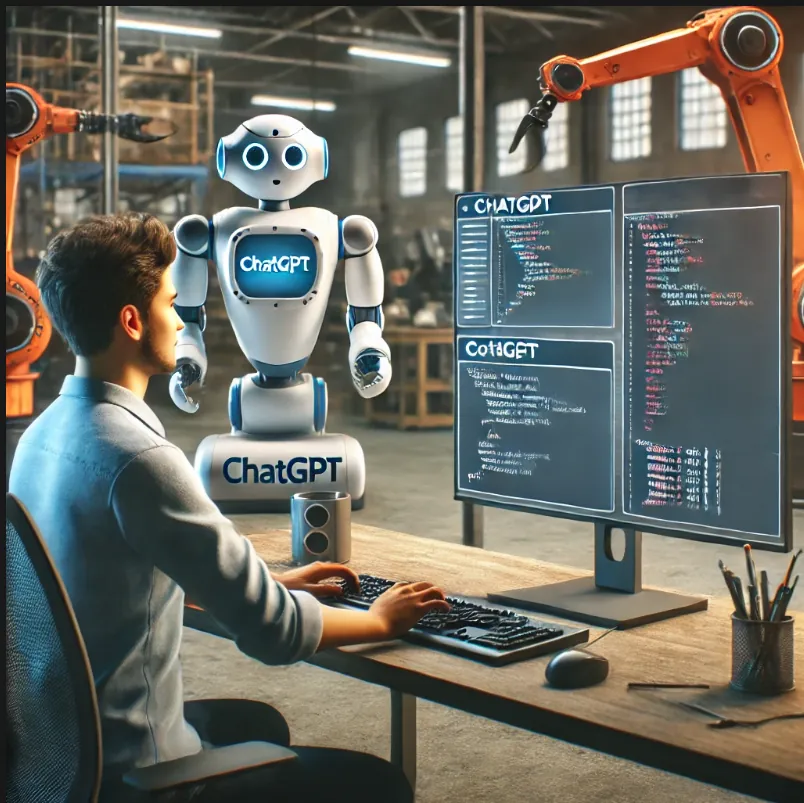
Real examples and technologies in action
Integration with ROS (Robot Operating System)
ChatGPT can connect to ROS to “translate” operators' spoken commands into specific instructions for robots. For example:
- Operator: “Move the box from point A to point B, choose the shortest route.”
- ChatGPT: Generates code for the robot's movement, using data from the obstacle sensors.
Case: An auto parts factory uses ChatGPT for cobots
In a hypothetical scenario, deploying ChatGPT in a logistics warehouse lets workers give commands to robots by voice or text:
- “Stack the packages on the pallet by height, avoiding the fragile boxes.”
- ChatGPT analyzes the command, checks the robot's parameters and sends instructions.
Challenges and risks
- Data security: Communication via ChatGPT requires encryption to prevent misuse of production information.
- Reliability: AI can make mistakes in critical situations (e.g. during emergency stops).
- Limitations of the language model: ChatGPT doesn't understand context like a person – for example, it won't “know” that a certain term is internal jargon.
The future: ChatGPT as a “dispatcher” between people and machines
By 2030, with the development of multimodal AI models (which process text, voice and images), ChatGPT could become:
- A virtual assistant for the whole plant, answering questions such as: “How many parts were produced today?” or “Which robot breaks down most often?”
- A bridge for global teams: An operator in Bulgaria gives commands to robots in Germany in their native language.
- A tool for creative problem-solving: For example: “How can we optimize the robot layout to cut production time by 15%?”
How can companies get started?
- Pilot projects: Integrate ChatGPT into one process (e.g. maintenance) and test the results.
- Team training: Create internal resources for communicating effectively with AI.
- Partnering with experts: Companies such as Artec Robotics offer customized solutions for deploying AI in industrial environments.
Conclusion
ChatGPT isn't a replacement for people or classic automation systems – it's a powerful tool that democratizes access to technology. By translating human language into machine commands, it makes robots more accessible to students, operators and managers who want to focus on innovation rather than technical details.
If your business is looking for ways to optimize interaction between people and robots, Artec Robotics offers consulting and solutions for integrating AI into production processes. Contact us to find out how to get started!
On the Artec Robotics “News” page you will find a variety of articles and guides on robotics and automation. Here you'll find useful information about the latest technologies, software solutions and programs that will help you dive deeper into the world of industrial robots and automated systems.
Follow the news from Artec Robotics!
MAKE AN INQUIRY