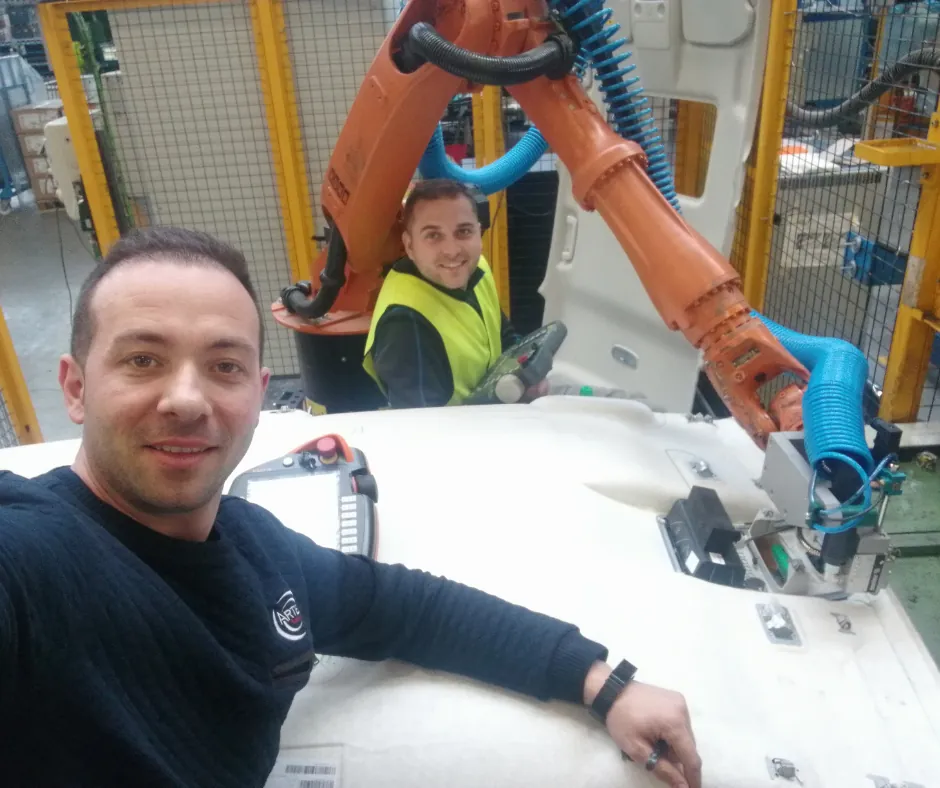
Unlock your employees' potential: Robots as partners, not replacements
In today's fast-moving world of technology, the idea of automation often triggers a mix of hope and anxiety. Many people wonder whether robots will take people's jobs. The truth, however, is far more encouraging: automation isn't meant to replace people but to free them so they can focus on more valuable and inspiring activities.
Human-robot collaboration: A symbiosis for success
Imagine a world where repetitive, boring and labor-intensive tasks are taken over by machines, while people focus on solving complex problems, creative thinking and strategic planning. This isn't science fiction but a reality taking shape before our eyes through human-robot collaboration.
Robots excel at performing precise, repetitive actions without tiring or making mistakes. This makes them ideal partners in production processes, warehousing, data processing and even customer service. Instead of seeing robots as competitors, we should see them as tools that extend human capabilities.
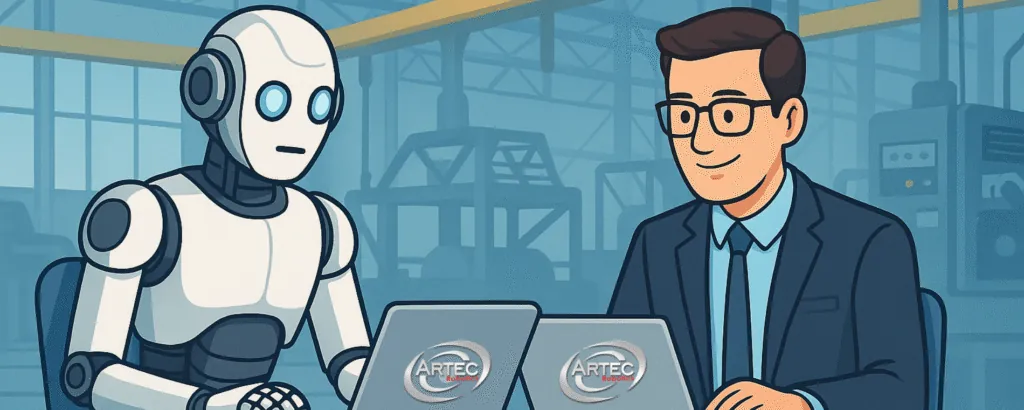
Upskilling: An investment in the future
One of the key benefits of bringing robots into the workflow is the opportunity to upskill employees. Once routine tasks are automated, employees can be redirected to more highly skilled roles that require uniquely human skills such as:
- Analysis and decision-making: People are unrivaled at interpreting complex data and making strategic decisions.
- Creativity and innovation: Developing new products, services and business models is entirely human territory.
- Emotional intelligence and customer service: Interacting with customers, resolving conflicts and building relationships require empathy and understanding.
- Supervision and control: Even in highly automated environments, human oversight is essential to ensure quality and safety.
Companies that invest in training and developing their employees for these new roles not only retain their talent but also create a more engaged, motivated and adaptable workforce.
New jobs in automation: Growth instead of layoffs
Despite the fears, automation actually leads to the creation of new jobs in automation. There's a growing need for specialists to design, install, program, maintain and troubleshoot robots. This includes robotics engineers, data specialists, maintenance technicians and trainers who help employees adapt to the new technologies.
In addition, freeing human capital from routine activities opens doors to innovation and business growth, which in turn can lead to the creation of entirely new industries and roles.
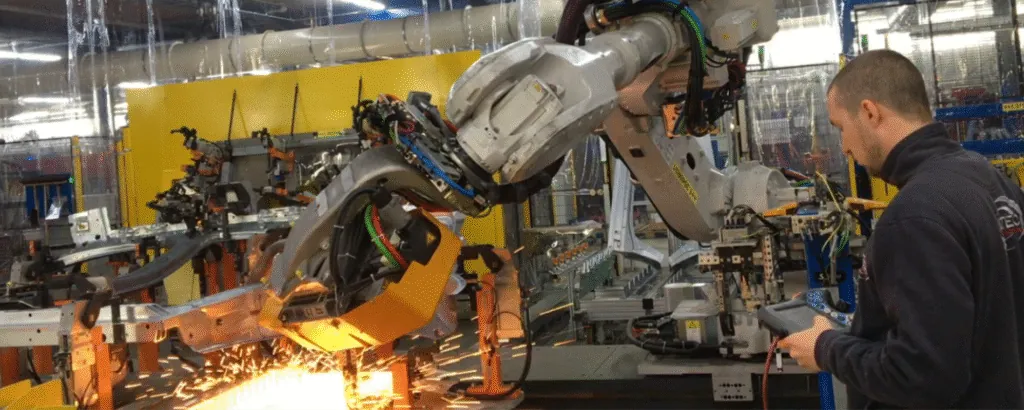
Robotics and human resources: A new era of collaboration
The human resources department plays a key role in this transition. It is responsible for:
- Strategic workforce planning: Identifying the need for new skills and roles.
- Reskilling and upskilling programmes: Developing and delivering training for employees.
- Change management: Helping employees accept and adapt to the new technologies.
- Building a culture of collaboration: Encouraging a positive attitude toward robots as partners.
Rather than being replacements, robots are a catalyst for the evolution of the workforce. They enable companies to become more efficient, innovative and competitive while freeing human potential for more meaningful and impactful work. The future lies in the symbiosis between people and machines, where technology serves us rather than dominating us.
On the Artec Robotics “News” page you will find a variety of articles and guides on robotics and automation. Here you'll find useful information about the latest technologies, software solutions and programs. They will help you dive deeper into the world of industrial robots and automated systems.
Follow the news from Artec Robotics!
MAKE AN INQUIRY