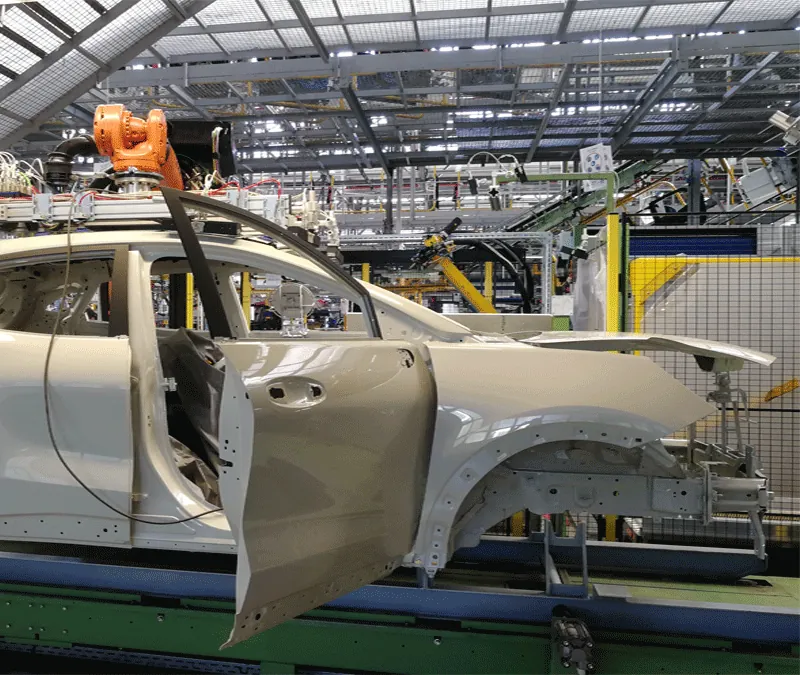
Automation in 2024: A year of significant change
Automation in 2024 developed at exceptional speed thanks to advances in artificial intelligence (AI), robotics and IoT (the Internet of Things). These technologies, combined with the power of cloud computing and expanded machine learning capabilities, led to significant changes in various industries, including manufacturing, transport, healthcare and services.
Main changes in automation in 2024
1. Wider use of artificial intelligence:
– In 2024, AI played a leading role in automation. Generative AI models such as ChatGPT and others were deployed to automate tasks such as writing, data analysis and even complex creative processes.
– In manufacturing, AI was integrated into quality management, where algorithms detect defects and optimize the production process in real time.
2. Robotics with a new generation of flexible robots:
– Collaborative robots (cobots) can now work safely alongside people in various industries. They're used in logistics, such as sorting parcels, and in medicine, where they assist surgeons in high-precision operations.
3. Development of IoT and autonomous systems:
– IoT devices have been improved with advanced sensors that collect, analyze and transmit data in real time. This has significantly improved the management of smart buildings and cities.
– Autonomous vehicles reached a new level of autonomy, with safer and more efficient navigation algorithms.
4. Automation of administrative processes:
– Robotic process automation (RPA) was expanded to cover even more business tasks, including inventory management, accounting and customer handling.
– Companies used automation to personalize the customer experience, which improved satisfaction and increased sales.

What to expect in 2025: A look at the future
2025 is expected to be a year of even more significant progress in automation. Here are some of the main forecasts:
1. Integration of artificial intelligence into every sphere:
– In 2025, AI will be even more integrated into our everyday lives. Applications such as personal assistants with advanced interaction and adaptation skills are expected to go mainstream.
– In healthcare, AI will support the early diagnosis of diseases by analyzing large amounts of medical data.
2. Development of quantum computing:
– Quantum computers will make it possible to solve problems that were previously too complex for traditional computers. This will significantly accelerate the development of automation, especially in scientific research and optimization.
3. Fully autonomous industries:
– Some production and services are expected to become fully autonomous, with minimal need for human intervention. One example is autonomous farms, where drones and robots manage the entire cycle of growing and harvesting crops.
4. Expanded automation in education and training:
– AI-based systems will be used for personalized learning, adapting to students' needs and pace.
– Virtual and augmented reality will become an important part of the educational process, providing practical experience in various disciplines.
5. Ethical and social aspects:
– Efforts to create a regulatory framework for the ethical use of automation will increase. Topics such as job losses will be a priority in discussions between governments, corporations and society.
Automation in 2024 demonstrated huge potential for improving efficiency and quality across industries. With the leaps expected in 2025, advances in technology will bring an even greater transformation to people's lives. However, along with technical progress, society will have to deal with new challenges related to ethics, jobs and regulation.
MAKE AN INQUIRY